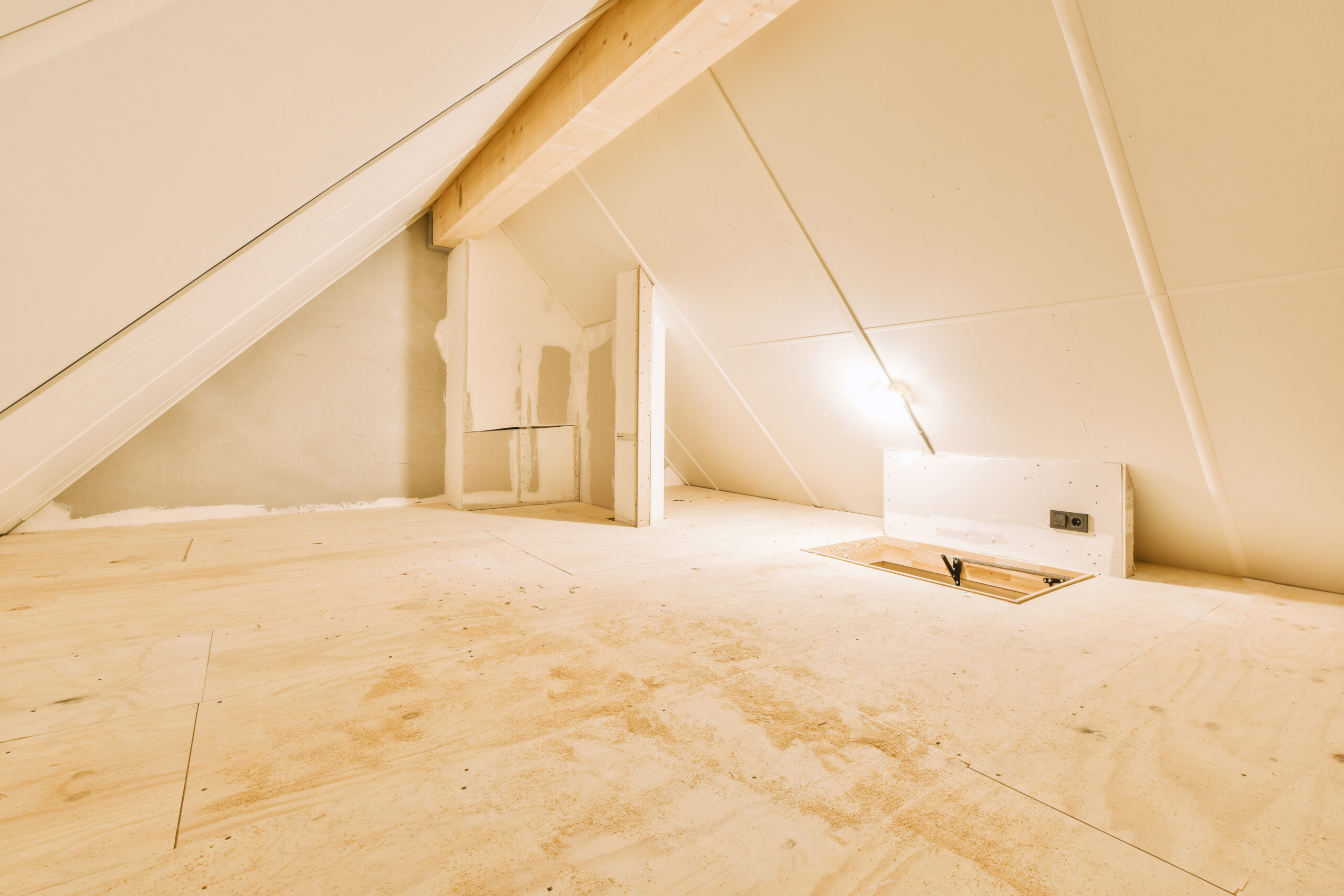
Loft Boarding is one of those home improvements that sounds brilliantly simple: lay a few boards, gain a whole new storage area, and finally reclaim your spare room from boxes of “I might need this one day.” But as with most things in a UK home, the reality comes with a few caveats, a dash of planning, and the occasional raised eyebrow from a building professional.

If you’ve ever peered into your loft and thought, “That’s wasted space,” you’re certainly not alone. With UK homes often short on storage, loft boarding has become an increasingly popular solution. The big question, however, is whether it’s genuinely worth the investment, or just another project that sounds better in theory than in practice.
Let’s unpack everything you need to know, from costs and benefits to weight limits, insulation clearance, and fire safety considerations, so you can decide whether your loft deserves a makeover.
What Is Loft Boarding?
Loft boarding involves installing raised panels across your loft joists to create a stable, usable surface for storage. It transforms an otherwise awkward, dusty space into something far more practical.
There are generally two approaches:
- Partial boarding: Only a section of the loft is boarded for light storage
- Full boarding: Most of the loft floor is covered, maximising usable space
Modern systems often use raised legs or supports to ensure insulation underneath isn’t compressed—a detail that’s far more important than it might first appear.
Why Loft Boarding Has Become So Popular?
Space is often limited in many UK homes, particularly in older properties where built-in storage provisions are minimal or insufficient.
Loft boarding offers:
- A relatively cost-effective storage solution
- Better organisation (goodbye, hallway clutter)
- Increased property appeal for buyers
- Potential energy efficiency improvements (when done properly)
It’s no surprise that “loft storage solutions UK” is a growing search trend, people are keen to make every square metre count.
The Big Benefit: Extra Storage Without an Extension
One of the strongest arguments for loft boarding is that it provides additional storage without the expense or disruption of a home extension.
Instead of:
- Converting a room
- Building outward
- Renting storage space
You’re simply making better use of what you already have.
And let’s be honest, there’s something quite satisfying about turning chaos into neatly stored, labelled boxes tucked away overhead.
But Is It Worth the Investment?
The answer depends on how you plan to use your loft.
It’s Worth It If:
- You need extra storage space
- Your loft is structurally sound
- You’re not planning a full loft conversion
- You want a relatively low-cost home upgrade
It May Not Be Worth It If:
- Your loft has limited headroom
- Access is difficult or unsafe
- You’re considering a full conversion later
- The structure isn’t suitable for additional load
In short, loft boarding is excellent for storage, but it’s not a shortcut to creating a liveable room.
Weight Limits: The Bit You Really Shouldn’t Ignore
Here’s where things get slightly more technical (but very important).
Loft joists in most UK homes are designed to support:
- The ceiling below
- Light storage
They are not typically designed to carry heavy loads.
Typical Weight Considerations:
- Light storage (boxes, decorations): generally fine
- Heavy furniture or dense items: potentially risky
- Water tanks or equipment: needs professional assessment
Overloading your loft can lead to:
- Sagging ceilings
- Structural damage
- Costly repairs
If you’re planning to store anything heavier than the occasional suitcase or Christmas decorations, it’s wise to consult a professional.
Raised Boarding Systems: A Smart Solution
To address both weight distribution and insulation concerns, many homeowners opt for raised loft boarding systems.
These systems:
- Sit above the insulation
- Distribute weight more evenly
- Prevent compression of insulation
They’re slightly more expensive than basic boarding but offer significant long-term benefits.
Insulation Clearance: Why It Matters More Than You Think?
One of the biggest mistakes in DIY loft boarding is compressing insulation.
Why This Is a Problem?
Insulation works by trapping air. When compressed:
- Its effectiveness is reduced
- Heat loss increases
- Energy bills can rise
Building regulations in the UK recommend adequate insulation depth, often around 270mm for modern standards.
The Solution:
- Use raised boarding systems
- Ensure a gap between insulation and boards
- Avoid flattening insulation layers
In other words, your loft should be both usable and energy-efficient, not one at the expense of the other.
Fire Safety Considerations
It’s easy to think of the loft as “out of sight, out of mind,” but fire safety is a crucial factor.
Key Fire Safety Points:
- Don’t block ventilation pathways
- Avoid storing flammable materials near wiring
- Ensure electrical cables aren’t damaged or trapped
- Maintain clear access routes
In some cases, additional fire-resistant materials or barriers may be recommended, particularly in newer builds or flats.
If your loft contains electrical systems or a boiler, extra caution is essential.
Access: Can You Actually Use the Space?
A beautifully boarded loft isn’t much use if accessing it feels like a workout.
Consider:
- Loft ladders (folding or telescopic)
- Enlarged hatch openings
- Lighting installation
Safe and easy access turns your loft from a “once-a-year” space into a genuinely useful storage area.
DIY vs Professional Installation
DIY Loft Boarding
Suitable if:
- You’re confident with tools
- The loft is straightforward
- You’re only boarding a small area
Professional Installation
Recommended if:
- You’re unsure about structural limits
- You want a raised system
- The loft has wiring, pipes, or uneven joists
- You want a long-lasting, compliant finish
Professionals can also advise on the best loft storage solutions UK, tailored to your home’s structure.
Costs: What Should You Expect?
Costs vary depending on size, materials, and whether you go DIY or professional.
Typical UK Cost Estimates:
- DIY materials: £200–£600+
- Professional installation: £1,000–£2,500+
While DIY is cheaper upfront, professional installation often ensures:
- Proper insulation clearance
- Safe load distribution
- Compliance with building standards
Will Loft Boarding Add Value to Your Home?
Loft boarding won’t add value in the same way as a full loft conversion, but it can:
- Improve buyer appeal
- Enhance storage functionality
- Make your home feel more organised
In competitive housing markets, practical storage is a definite plus.
Common Mistakes to Avoid
1. Boarding Directly Onto Joists
This compresses insulation and reduces energy efficiency.
2. Overloading the Loft
Not all lofts are built to carry heavy loads.
3. Ignoring Ventilation
Poor airflow can lead to condensation and damp.
4. Skipping Safety Checks
Electrical wiring and structural elements must be considered.
A Quick Reality Check
Loft boarding can absolutely transform your home, but it’s not a magical solution for hoarding tendencies. If your plan is to store everything you’ve owned since 2003 “just in case,” you might find even a fully boarded loft mysteriously fills up faster than expected.
Still, as far as home improvements go, it’s one of the more practical, and satisfying, projects you can undertake.
Final Thoughts!
Loft Boarding is, in many cases, a worthwhile investment for homeowners looking to maximise storage without major renovations. When done correctly, it offers a practical, efficient, and relatively affordable way to make better use of your home.
The key is to approach it thoughtfully, respecting weight limits, maintaining proper insulation clearance, and ensuring fire safety isn’t overlooked. Whether you choose a DIY route or bring in professionals, a well-planned loft boarding project can make a noticeable difference to your home’s functionality.
Because at the end of the day, it’s not just about creating more space, it’s about creating smarter space. And if you enjoy practical home upgrades like this, do give The Household Daily a follow for more clever ideas, useful tips, and everyday inspiration to keep your home working at its best.