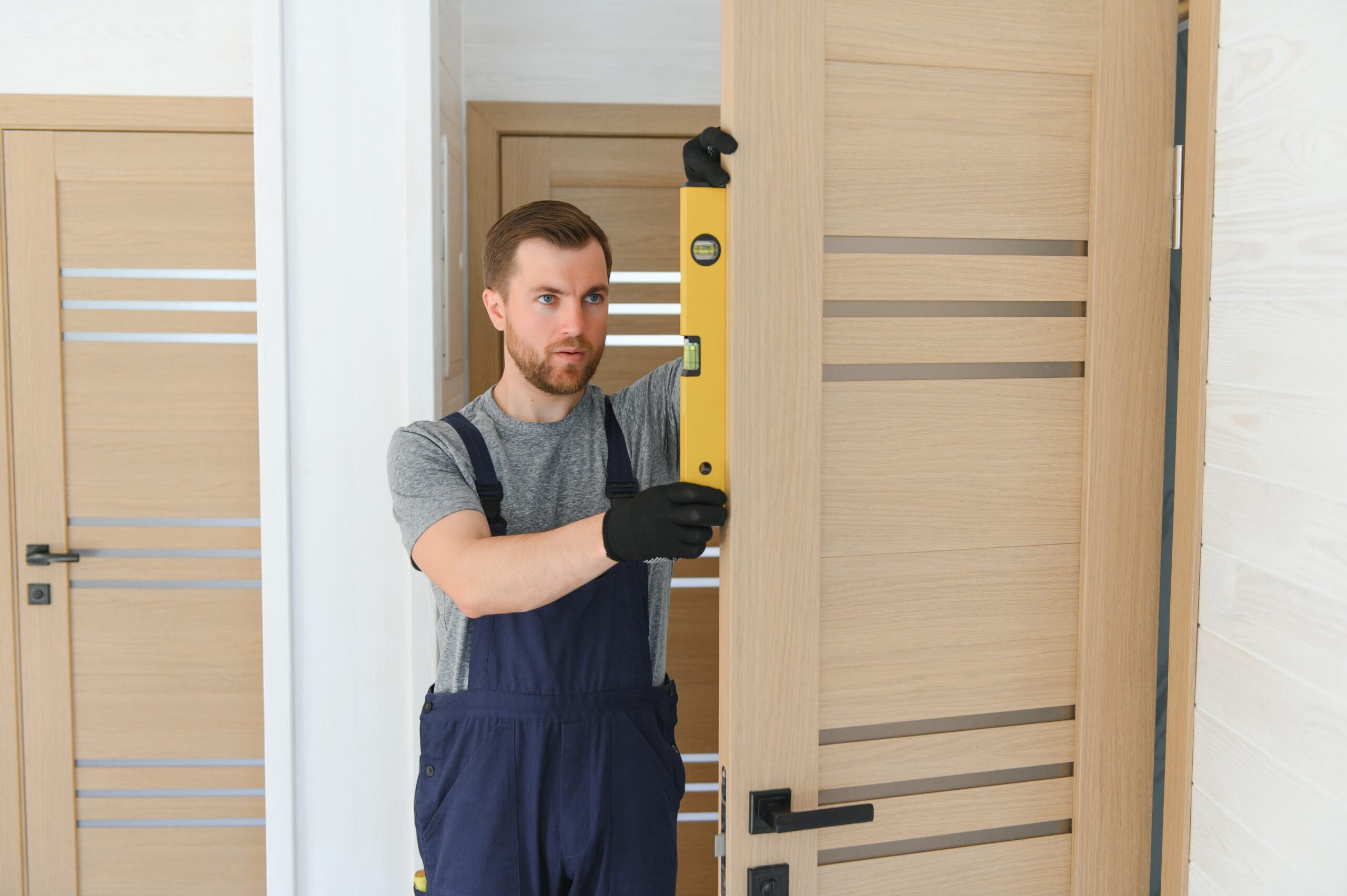
Door Alignment Problems have a sneaky way of starting small, just a slight scrape here, a stubborn latch there, before turning into a daily nuisance that makes you question whether your door has developed a personality of its own.

We’ve all been there. A door that once glided shut now sticks, creaks, or refuses to latch unless you give it a firm nudge (or an undignified shoulder barge). While it might seem like a minor inconvenience, a misaligned door can point to underlying issues that shouldn’t be ignored, especially in UK homes where seasonal changes, humidity, and settling structures all play their part.
So, when is it a quick DIY fix, and when does it signal something more serious? In this guide, we’ll explore the common causes of door alignment problems, practical solutions, and when it’s time to call in a professional carpenter.
What Are Door Alignment Problems?
A properly aligned door should open and close smoothly, sit evenly within its frame, and latch without effort. When alignment is off, you may notice:
- The door sticking or scraping against the frame or floor
- Uneven gaps around the edges
- Difficulty closing or latching
- Hinges pulling away from the frame
- Draughts or light coming through gaps
While these issues might seem minor at first, they can worsen over time if left untreated.
Common Causes of Misaligned Doors
Understanding the root cause is key to finding the right solution. Door repair UK specialists often point to the following culprits:
1. Seasonal Changes and Humidity
In the UK, fluctuating weather can cause materials like wood to expand and contract. During damp winters, wooden doors may swell slightly, while in drier conditions, they shrink.
This constant movement can throw off alignment over time, especially in older homes.
2. Loose or Worn Hinges
Hinges bear the full weight of your door, so it’s no surprise they wear out. Loose screws or worn hinge plates can cause the door to sag, leading to misalignment.
This is one of the most common, and thankfully fixable, issues.
3. Settling of the Building
Homes naturally settle over time, particularly in older UK properties. As the structure shifts, door frames can become slightly distorted.
This is often why a door that worked perfectly for years suddenly starts misbehaving.
4. Warped Doors or Frames
Exposure to moisture, heat, or poor-quality materials can cause doors or frames to warp. Once this happens, alignment becomes more difficult to correct with simple adjustments.
5. Poor Installation
Sometimes, the issue dates back to the original installation. If the door or frame wasn’t properly aligned to begin with, problems are bound to appear sooner or later.
DIY Fixes for Misaligned Doors
Before you pick up the phone to a professional, there are several DIY solutions worth trying. Many door alignment problems can be resolved with basic tools and a bit of patience.
Tightening the Hinges
Start with the simplest fix:
- Check all hinge screws
- Tighten any that are loose
- Replace stripped screws with longer ones for a firmer hold
This alone can often lift a sagging door back into place.
Adjusting the Hinges
If tightening doesn’t work, you may need to adjust the hinges:
- Remove the hinge pins
- Slightly bend the hinge knuckles
- Reinsert the pins and test the door
Alternatively, you can reposition the hinges slightly by unscrewing and shifting them.
Using Cardboard Shims
A clever (and surprisingly effective) trick:
- Remove the hinge
- Place a thin piece of cardboard behind it
- Reattach the hinge
This can help realign the door within the frame without major alterations.
Sanding Down the Door
If the door is sticking due to swelling:
- Identify the areas of friction
- Lightly sand those sections
- Repaint or reseal to protect the surface
It’s a simple fix, but go slowly. Over-sanding can create new gaps.
Adjusting the Strike Plate
If the door won’t latch properly:
- Loosen the strike plate
- Reposition it slightly
- Tighten and test
Sometimes the issue isn’t the door itself, but where it meets the frame.
Tools You’ll Need for DIY Repairs
For most misaligned door fixes, you’ll want to have:
- Screwdriver or drill
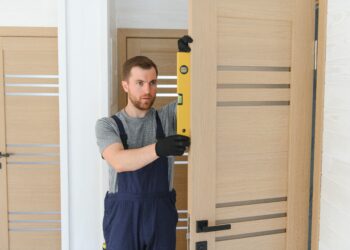
- Spirit level
- Sandpaper or electric sander
- Wood filler (for damaged areas)
- Replacement screws
- Utility knife
- Measuring tape
Nothing too exotic, just the basics for a weekend repair job.
When DIY Fixes Aren’t Enough?
While many issues can be resolved at home, there are times when a simple adjustment won’t cut it.
Here’s when to consider calling a professional for door repair UK services:
Persistent Misalignment
If the door continues to sag or stick despite multiple fixes, the underlying issue may be structural.
Warped Doors or Frames
Warping often requires planing, reshaping, or even replacement, tasks best handled by a carpenter.
Cracked or Damaged Frames
If the frame itself is compromised, DIY solutions won’t provide a lasting fix.
Significant Gaps or Draughts
Large gaps can affect insulation and energy efficiency. A professional can properly realign or refit the door.
Fire Doors and External Doors
For safety and security reasons, these should always be correctly installed and aligned. If in doubt, leave it to the experts.
Hiring a Carpenter: What to Expect?
When DIY isn’t enough, a qualified carpenter can assess and resolve the issue efficiently.
Typical Door Repair UK Costs
Costs can vary depending on the complexity of the job, but as a general guide:
- Minor adjustments: £50–£100
- Planing or resizing a door: £80–£150
- Rehanging a door: £100–£200
- Frame repairs or replacements: £200+
Prices may be higher in London and the South East.
What a Carpenter Will Do?
A professional will:
- Assess the root cause of the misalignment
- Check the frame, hinges, and door condition
- Plane or adjust the door as needed
- Reinforce or replace hinges
- Ensure proper alignment and smooth operation
In short, they’ll do in a few hours what might take a DIYer an entire weekend, and possibly with fewer muttered complaints.
Preventing Future Door Alignment Problems
Once your door is back in working order, a little maintenance can go a long way.
Regular Checks
- Tighten screws periodically
- Inspect hinges for wear
- Check for early signs of misalignment
Control Indoor Humidity
- Use dehumidifiers in damp areas
- Ensure proper ventilation
- Avoid excessive moisture exposure
Maintain Door Finishes
- Repaint or reseal wooden doors
- Protect against moisture and temperature changes
Address Issues Early
Small problems are much easier, and cheaper, to fix than major ones.
Internal vs External Doors: Different Challenges
It’s worth noting that internal and external doors face different conditions:
Internal Doors
- More affected by indoor humidity
- Easier to repair
- Lower cost fixes
External Doors
- Exposed to weather elements
- More prone to warping
- Require precise alignment for security and insulation
External doors often demand a more professional approach.
The Hidden Impact of Misaligned Doors
Beyond the obvious annoyance, misaligned doors can lead to:
- Increased energy bills (due to draughts)
- Reduced home security
- Faster wear on hinges and frames
- Damage to flooring
What starts as a minor inconvenience can quietly affect your home’s comfort and efficiency.
DIY vs Professional: Which Should You Choose?
Here’s a quick comparison to help you decide:
| Factor | DIY Fix | Professional Repair |
|---|---|---|
| Cost | Low | Moderate |
| Time | 1–2 days | Few hours |
| Skill Required | Basic to moderate | Expert |
| Finish Quality | Variable | High |
| Risk of Errors | Higher | Lower |
Concluding Thoughts!
Door alignment problems might seem like a small domestic annoyance, but they’re often a sign that your home needs a bit of attention. Whether it’s a loose hinge, seasonal swelling, or structural settling, addressing the issue promptly can save you time, money, and a fair bit of daily frustration.
For those who enjoy a bit of DIY, many fixes are well within reach. But when the problem goes beyond a simple tweak, calling in a professional carpenter ensures the job is done properly—and your door returns to behaving like, well, a door.
Because at the end of the day, a smoothly closing door is one of life’s quiet little luxuries, right up there with a kettle that boils quickly and a biscuit that doesn’t break mid-dunk.
For more practical home advice and clever fixes, don’t forget to follow The Household Daily, your trusted guide to keeping your home running smoothly.