Patio & Driveway Cleaning Patio & Driveway Cleaning is one of those household tasks that quietly slips down the to-do list until the moss starts waving at the neighbours. Suddenly, what once looked neat and welcoming begins to resemble an archaeological site. The question then arises, is pressure washing actually worth it, or is it just another shiny tool promising miracles?

A clean patio and driveway instantly improve a home’s kerb appeal. Whether you live in a cosy semi-detached house or a sprawling countryside property, the exterior surfaces create the first impression. Over time, dirt, algae, oil stains, tyre marks, and especially moss creep in, making once-bright surfaces dull and slippery. This is where pressure washing enters the conversation. But before firing up a high-powered jet of water, it’s worth understanding the benefits, risks, and practical considerations.
Why Patio & Driveway Cleaning Matters?
Exterior surfaces endure everything the British weather throws at them, persistent rain, winter frost, drifting leaves, and the occasional unwelcome “gift” from passing pigeons. Over time, these elements gradually wear down patios and driveways, dulling their appearance and allowing dirt and moisture to settle into tiny cracks and pores. Without regular attention, even the most attractive paving can begin to look tired and neglected.
Routine patio and driveway cleaning is therefore not only about visual appeal but also about safety and long-term maintenance. Moss and algae thrive in damp conditions and can quickly turn smooth paving into a slippery hazard, especially during colder months when frost is present. Beyond the immediate risk of slips and falls, accumulated grime and organic growth can weaken surfaces, contributing to cracks, staining, and gradual material deterioration if left untreated.
What Is Pressure Washing?
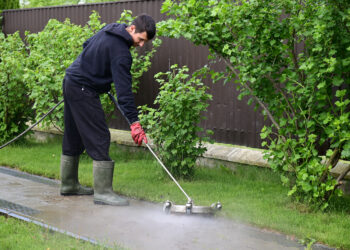
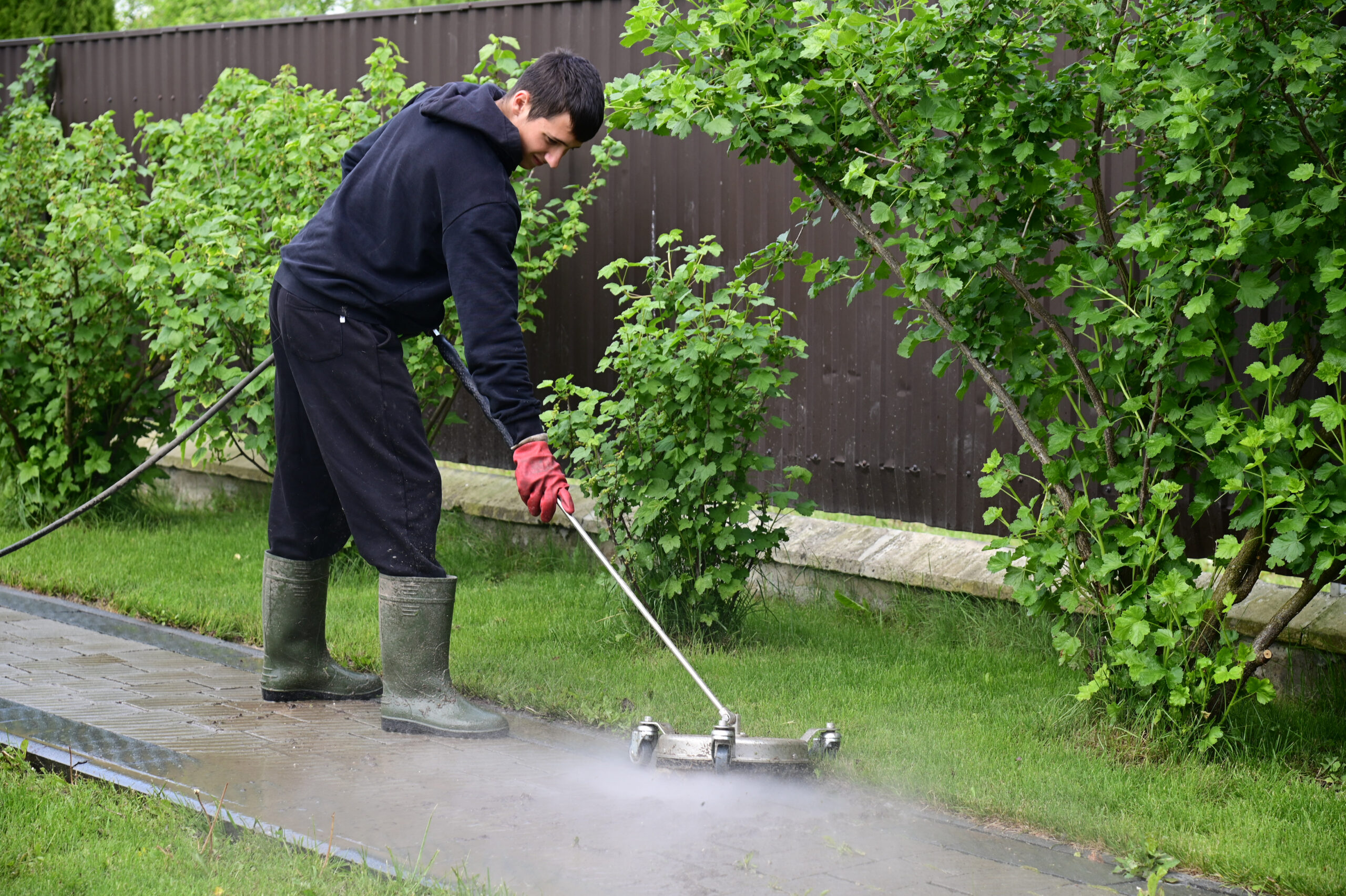
Pressure washing uses high-powered water jets to blast away dirt, stains, and organic growth from surfaces. Unlike a standard garden hose, pressure washers deliver water at a force capable of lifting stubborn grime embedded in stone or concrete. They are commonly used for:
- Patios
- Driveways
- Garden paths
- Decking
- Brick walls
However, with great power comes great responsibility. Pressure washing is highly effective, but it must be used correctly to avoid unintended damage.
Surface Safety: Know Before You Spray
Not all surfaces are created equal. While concrete driveways and stone patios generally withstand pressure washing well, softer materials require caution. For example:
- Block paving: Effective but can loosen sand between blocks.
- Natural stone: Some stones like sandstone can erode if pressure is too high.
- Wood decking: High pressure may splinter or strip protective coatings.
- Resin driveways: Often unsuitable for strong pressure jets.
Using the wrong pressure setting can lead to etching, cracks, or surface wear. Professionals usually adjust pressure levels and nozzle types depending on the material. DIY users should always test a small, inconspicuous area first. Think of it as dipping your toe in before cannonballing into the deep end.
Moss Removal: The Hidden Hazard
Moss is one of the most common culprits behind grimy patios and driveways in the UK. Damp weather combined with shade creates the perfect environment for moss to flourish. While it may look harmless, it poses both aesthetic and safety risks.
Pressure washing is particularly effective for moss removal because it dislodges roots embedded in cracks and pores. However, it’s important to treat the area afterwards with a moss inhibitor or weed killer to prevent rapid regrowth. Otherwise, the moss simply returns, rather smugly, as if nothing happened.
Manual scraping and chemical treatments can work, but pressure washing provides the fastest and most thorough removal, provided it is done carefully.
Frequency Recommendations: How Often Should You Clean?
There is no universal schedule, but most households benefit from patio and driveway cleaning once or twice a year. Factors influencing frequency include:
- Weather exposure: Rainy regions may require more frequent cleaning.
- Tree coverage: Falling leaves and shade encourage moss growth.
- Foot and vehicle traffic: Higher use equals faster dirt accumulation.
- Surface type: Porous surfaces attract grime more quickly.
A spring clean is particularly popular, preparing outdoor spaces for summer gatherings. An autumn clean can also be useful to remove fallen leaves before winter sets in. In essence, if your patio begins to resemble a nature reserve, it’s probably time.
DIY Pressure Washing vs Professional Services
DIY Approach
Many homeowners consider purchasing or renting a pressure washer. The appeal is understandable, it seems cost-effective and offers flexibility. However, DIY pressure washing comes with considerations:
- Equipment purchase or rental costs
- Water usage and electricity consumption
- Learning curve for pressure settings
- Risk of surface damage
- Physical effort and time investment
For small patios or light cleaning, DIY may suffice. For larger driveways or heavily stained areas, the task can become surprisingly demanding.
Professional Services
Hiring professionals offers expertise, efficiency, and peace of mind. Professionals typically use commercial-grade equipment and apply the correct techniques for different materials. They also often include post-clean treatments to prevent moss regrowth.
Understanding Driveway Cleaning Cost
The driveway cleaning cost varies depending on size, surface type, and location within the UK. On average:
- Small driveways may range from £50–£100
- Medium-sized driveways often fall between £100–£200
- Large or heavily stained areas can exceed £250
While this may initially seem like an expense, it can be more economical than repairing damaged surfaces caused by incorrect DIY pressure washing. In other words, sometimes spending a little saves a lot, much like buying sturdy shoes instead of repeatedly replacing flimsy ones.
Environmental Considerations
Pressure washing uses a considerable amount of water, so approaching it thoughtfully is important. While the results can be impressive, being mindful of consumption helps reduce unnecessary waste and keeps the process environmentally responsible. Many professional cleaning services now use eco-friendly detergents, adjustable pressure systems, and water-saving techniques to minimise their environmental footprint while still achieving excellent cleaning results.
Another factor to consider is water runoff. During pressure washing, dirt, oils, moss residue, and cleaning chemicals can flow into nearby drains or soil if not managed properly. This can contribute to local pollution or damage surrounding plants. Using biodegradable products, directing runoff safely, and avoiding harsh chemicals where possible ensures that your patio or driveway ends up cleaner without creating unintended environmental side effects.
Is Pressure Washing Worth It?
In most cases, yes, when done correctly. Pressure washing restores surfaces quickly, improves safety by removing moss and algae, and enhances overall appearance. The key lies in balancing effectiveness with caution. For confident DIY enthusiasts, smaller areas may be manageable. For extensive or delicate surfaces, professional assistance is often the wiser choice.
Ultimately, patio and driveway cleaning is less about perfection and more about preservation. A clean exterior makes outdoor spaces more enjoyable and prevents long-term damage. It is one of those household tasks that pays dividends in both pride and practicality.
If you ever feel uncertain about tackling the task yourself, it’s always a good idea to seek professional help. With expert support, we’ll complete the job safely and effectively, helping preserve your patio for years to come. For more practical home tips and reliable guidance, be sure to follow The Household Daily. Your home may not use social media, but you certainly can.