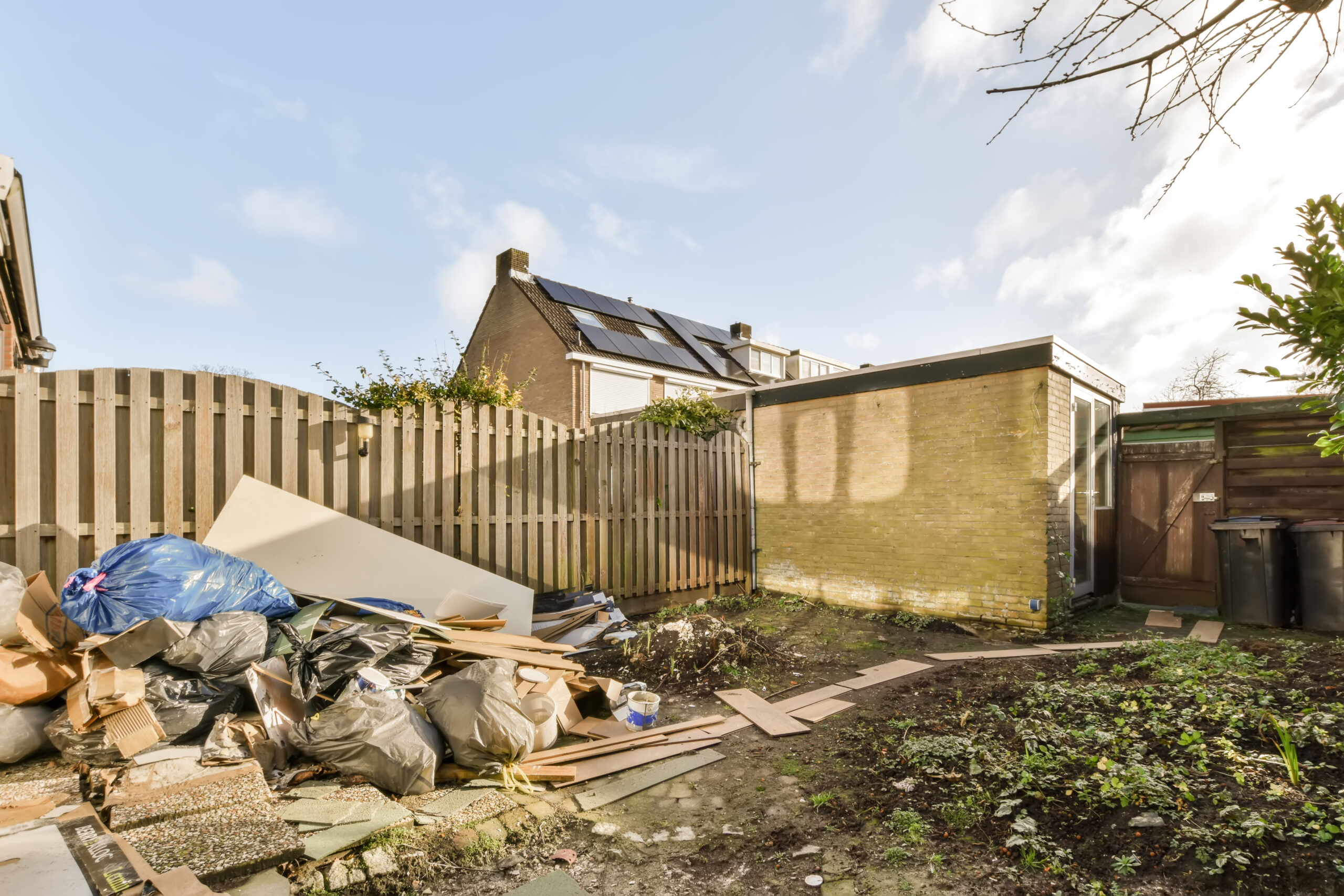
Rubbish clearance vs skip hire is one of those practical dilemmas many UK households face the moment clutter starts piling up faster than the weekly bin collection can handle. Whether you’re tackling a long-overdue garage clear-out, renovating the kitchen, or simply trying to reclaim the spare room from years of “just in case” items, choosing the right waste solution matters more than most people expect.

At first glance, both options promise the same thing: your unwanted rubbish disappears, and your home breathes again. But when you dig a little deeper, differences in cost, convenience, permits, and timing quickly become clear. What works brilliantly for one household can be unnecessarily expensive or inconvenient for another.
This guide breaks down the real-world pros, cons, and waste removal costs in the UK so you can decide which option is genuinely cheaper and easier for your situation, and avoid any surprises.
What Is Rubbish Clearance?
Rubbish clearance is essentially the “we do the heavy lifting” option. A professional team arrives at your property, loads the waste themselves, and takes it away for disposal or recycling.
It’s often called:
- Man and van rubbish removal
- Junk removal
- House clearance (for larger jobs)
The key appeal is convenience. You point to the pile, and the professionals handle the rest. No skip sitting on your driveway, no lifting heavy items, and no need to estimate how much space you’ll need.
Typical Uses
Rubbish clearance works especially well for:
- One-off clear-outs
- Furniture disposal
- Garden waste piles
- Loft or garage decluttering
- End-of-tenancy clearances
For many busy households, the time-saving element alone makes it attractive.
What Is Skip Hire?
Skip hire is the more traditional DIY waste solution. A large metal container is delivered to your property, you fill it at your own pace, and the company collects it when you’re done.
Skips come in various sizes, typically:
- Mini skip (2–3 yards)
- Midi skip (4–5 yards)
- Builder’s skip (6–8 yards)
- Large skip (10–12+ yards)
The appeal here is flexibility and potentially lower cost for large volumes, provided you’re happy to do the loading yourself.
Waste Removal Cost UK: What You’ll Typically Pay?
Let’s address the question most households care about first: money.
Prices vary by region and provider, but typical UK ranges look like this:
Rubbish Clearance Costs
Most companies charge based on volume and labour.
Average price guide:
- Small load (up to 250kg): £70–£120
- Quarter van load: £120–£180
- Half van load: £180–£250
- Full van load: £300–£450+
Pros:
- You only pay for what’s taken
- Labour included
- Often same-day service
Cons:
- Can become expensive for very large amounts
- Pricing can vary between providers
Skip Hire Costs
Skip prices depend mainly on size and location.
Typical UK skip hire prices:
- Mini skip: £90–£150
- Midi skip: £140–£220
- Builder’s skip: £200–£350
- Large skip: £300–£500+
Extras to watch for:
- Road permits (£30–£80+)
- Extended hire fees
- Overweight charges
- Restricted items fees
At first glance, skip hire often looks cheaper, but the full picture depends heavily on your situation.
Time and Convenience: Which Is Easier?
When comparing rubbish clearance vs skip hire, time is often the deciding factor.
Rubbish Clearance: Fast and Hands-Off
With professional clearance:
- Booking can often be same-day or next-day
- Teams typically finish within 30–60 minutes
- No lifting required from you
- No waiting around for days
For busy households or anyone short on time, this is hard to beat.
Best for: quick clear-outs and minimal effort.
Skip Hire: Flexible but Slower
Skip hire gives you more time but requires more involvement.
You will need to:
- Load everything yourself
- Break down bulky items
- Fill the skip efficiently
- Arrange collection
While the skip usually stays for 7–14 days, the job often drags on longer than expected.
Best for: ongoing projects and renovations.
Permit Requirements: The Often-Overlooked Factor
Permit rules can quietly add cost and hassle, and they’re frequently underestimated.
When You Need a Skip Permit?
You’ll usually need a council permit if the skip sits on:
- A public road
- Pavement
- Verge
You typically don’t need one if the skip is entirely on private property like:
- Driveways
- Private land
However, many UK homes don’t have sufficient driveway space, which complicates things.
Why This Matters?
Permit issues can add:
- Extra cost (£30–£80+)
- Administrative delays
- Placement restrictions
- Potential fines if done incorrectly
Rubbish Clearance: No Permit Needed
One major advantage of rubbish clearance is simplicity.
Because the waste is loaded directly into a vehicle:
- No skip is left behind
- No permit is required
- No risk of council issues
- No neighbour complaints about blocked parking
For urban households especially, this can be a decisive benefit.
Household Size: What Works Best for Different Homes?
Your property size and waste volume heavily influence which option wins.
-Small Flats and Terraced Homes
For smaller households:
- Limited outdoor space
- Smaller waste volumes
- Parking constraints
Rubbish clearance usually wins because:
- No space needed for a skip
- Quick removal
- Pay only for what you have
-Medium Family Homes
For average UK households, the choice depends on the project.
Rubbish clearance is better if:
- You’re decluttering
- Clearing furniture
- Doing a one-off purge
Skip hire is better if:
- You’re doing DIY renovations
- Producing steady waste over days
- Have driveway space
-Large Homes or Major Renovations
For heavy building work or full house renovations:
- Waste volume is high
- Waste is generated continuously
- Labour is already on-site
In these cases, skip hire is usually more economical, particularly builder’s skips or larger.
Environmental Considerations
Many households today want to know where their waste actually ends up.
Rubbish Clearance Companies
Reputable clearance firms often:
- Sort waste manually
- Maximise recycling
- Divert from landfill
- Provide waste transfer notes
Because they handle items individually, recycling rates can sometimes be higher.
Skip Hire Disposal
Skip companies also recycle, but:
- Mixed waste is harder to sort
- Overfilled skips can cause issues
- Incorrect loading may contaminate recyclables
The key is choosing a licensed provider in either case.
Hidden Costs to Watch For
The headline price rarely tells the full story.
-Potential Skip Hire Extras
Watch out for:
- Permit fees
- Overfilling charges
- Weight limits
- Extended hire fees
- Failed delivery charges
These can quietly increase your total waste removal cost UK beyond expectations.
-Potential Rubbish Clearance Extras
Less common, but possible:
- Minimum load fees
- Heavy item surcharges
- Out-of-hours charges
- Access difficulties
Always request an upfront quote with clear terms.
Safety and Physical Effort
This is where the two options differ dramatically.
Skip Hire: DIY Labour
With a skip, you’ll need to:
- Lift heavy bags
- Carry bulky items
- Break down furniture
- Load safely at height
This can be physically demanding and occasionally risky.
Rubbish Clearance: Professionals Handle It
Clearance teams typically:
- Do the lifting
- Navigate awkward spaces
- Remove bulky furniture
- Load safely and efficiently
For older homeowners, busy families, or anyone with back concerns, this is often the deciding factor.
Speed Comparison: Real-World Scenarios
Let’s look at how each option typically plays out.
Scenario 1: Garage Clear-Out
- Rubbish clearance: finished in under an hour
- Skip hire: delivered, filled over weekend, collected later
Winner for speed: rubbish clearance
Scenario 2: Kitchen Renovation
- Rubbish clearance: multiple collections needed
- Skip hire: one skip handles ongoing waste
Winner for practicality: skip hire
Scenario 3: End-of-Tenancy Clean-Up
- Rubbish clearance: same-day solution
- Skip hire: overkill for most cases
Winner for convenience: rubbish clearance
Quick Decision Guide
If you want the simplest rule of thumb:
Choose rubbish clearance if:
- You want minimal effort
- The job is one-off
- Space is limited
- You need fast removal
- You want no permit hassle
Choose skip hire if:
- You’re doing renovations
- Waste builds up over time
- You have driveway space
- Volume is very large
- You don’t mind the loading
Final Verdict: Which Is Cheaper and Easier?
There’s no universal winner in the rubbish clearance vs skip hire debate, but there is a clear pattern.
For most everyday household clear-outs, rubbish clearance tends to be easier, faster, and surprisingly competitive on price, especially once you factor in labour, permits, and time saved.
Skip hire usually becomes the more economical option only when:
- Waste volumes are very high
- Work is ongoing
- You have suitable space
- You’re comfortable doing the lifting
In short, the cheapest option on paper isn’t always the cheapest in practice. The smartest choice comes down to your household size, available time, permit requirements, and how much heavy lifting you’re realistically willing to do.
For more practical home advice, cost guides, and no-nonsense household tips, do feel warmly invited to follow The Household Daily.