Shed Installation is one of those home improvement projects that seems wonderfully straightforward at first glance, until you realise there are decisions to make about bases, tools, durability, and whether you truly want to spend a weekend wrestling with instruction manuals and mysterious leftover screws. For many homeowners across the United Kingdom, a garden shed represents an essential element of outdoor storage, providing a practical and organised space for tools, bicycles, gardening equipment, and items that are temporarily set aside for future sorting.

When planning shed installation, one of the biggest choices is whether to buy a pre-built shed or assemble one yourself. Both options have advantages and drawbacks, particularly when considering durability, preparation, cost, and the time required to get everything standing upright rather than leaning slightly to the left.
In this guide, we’ll explore the pros and cons of pre-built sheds versus DIY assembly, discuss base preparation and required tools, and break down the time vs cost trade-offs, including the typical garden shed assembly cost in the UK.
By the end, you’ll know which approach makes the most sense for your garden and your patience.
Why Garden Sheds Are So Popular in the UK?
Garden sheds have become a staple feature in British homes for several practical reasons.
First, outdoor storage space is often limited, especially in terraced or semi-detached homes. A shed provides a convenient place to store:
- Lawn mowers
- Gardening tools
- Outdoor furniture cushions
- Bicycles and sports equipment
- DIY supplies
Second, sheds can double as hobby spaces, mini workshops, or even quiet corners for gardening enthusiasts who prefer potting plants without interruption.
Finally, sheds can improve garden organisation. Instead of cluttering patios or garages, tools stay safely tucked away.
However, the key to getting the most from a shed is choosing the right installation method.
Option 1: Buying a Pre-Built Shed
A pre-built shed arrives either fully assembled or partially constructed, often delivered in large panels or sections.
Advantages of Pre-Built Sheds
1. Faster installation
The most obvious benefit is speed. With professional delivery and installation, a pre-built shed can be placed in your garden and ready to use within hours.
This eliminates the need to spend a full weekend assembling panels, aligning roof sections, or deciphering diagrams that appear to have been drawn by someone who has never actually seen a shed.
2. Professional construction quality
Pre-built sheds are typically assembled by professionals who understand structural alignment, waterproofing, and secure fitting.
This often leads to better durability and fewer structural issues compared with rushed DIY assembly.
3. Fewer tools required
Since installers handle most of the work, homeowners usually only need basic tools for minor adjustments.
4. Reduced installation stress
Pre-built sheds remove the complexity of construction. If DIY projects aren’t your favourite activity, this can be a significant advantage.
Disadvantages of Pre-Built Sheds
Despite their convenience, pre-built sheds also have limitations.
1. Higher upfront cost
Professional installation increases the total price.
Depending on size and design, the garden shed assembly cost for professional installation in the UK can range between:
- £150 – £300 for small sheds
- £300 – £600 for medium sheds
- £600+ for large or custom sheds
2. Delivery access limitations
Pre-built sheds require adequate garden access. Narrow gates or tight pathways can make delivery difficult.
In some cases, installers may refuse installation if the structure cannot be safely transported.
3. Less flexibility
Some pre-built options offer fewer customisation choices compared with flat-pack sheds.
Option 2: Assembling a Shed Yourself
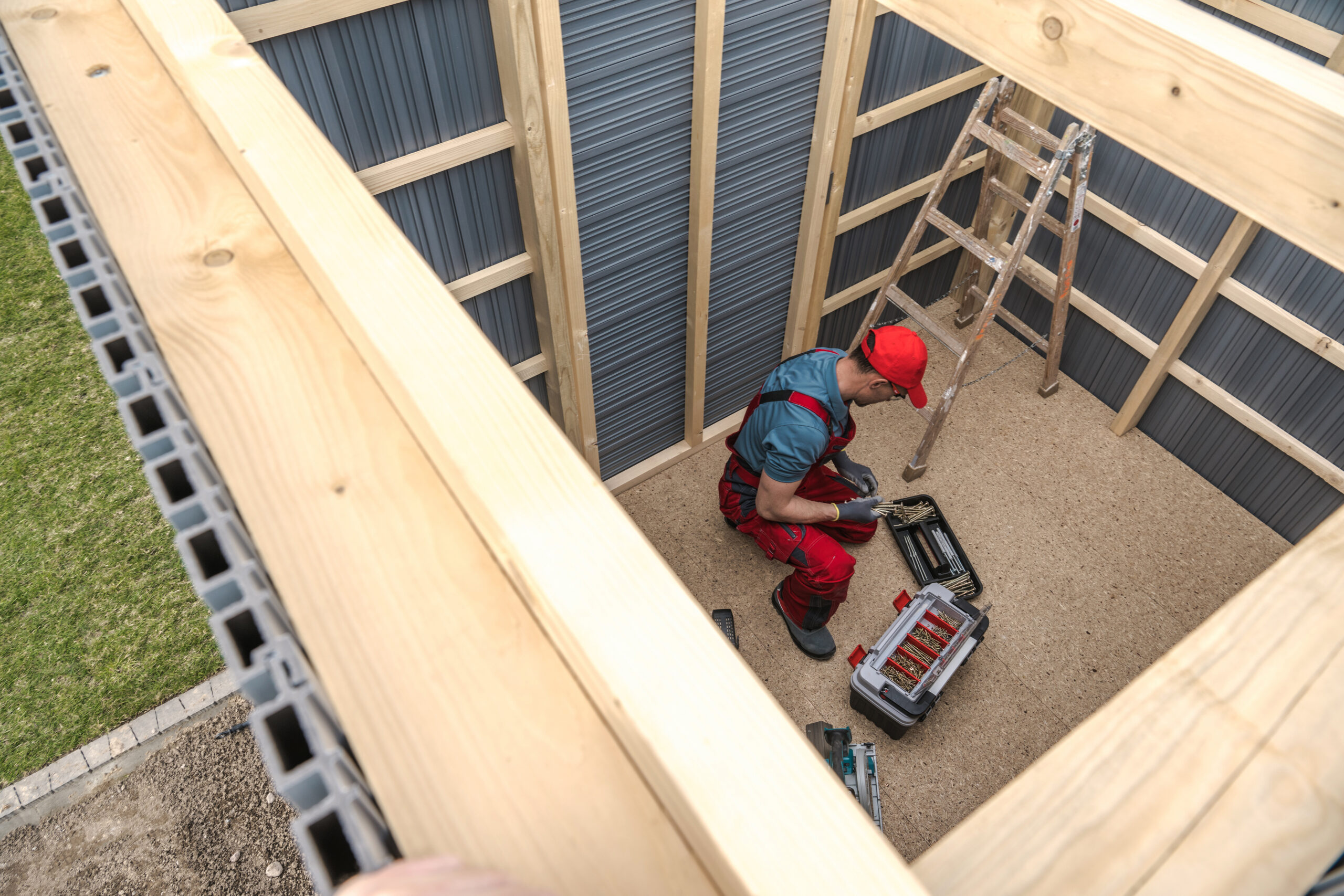
DIY shed assembly involves purchasing a flat-pack shed kit and building it from individual components.
For homeowners who enjoy practical projects, this can be a rewarding experience.
Advantages of DIY Shed Assembly
1. Lower upfront cost
The biggest advantage of DIY assembly is cost savings.
By avoiding professional labour fees, you reduce the overall garden shed assembly cost, sometimes saving several hundred pounds.
2. Greater customisation
When assembling a shed yourself, you have more control over:
- Paint or stain finishes
- Shelf placement
- Interior organisation
- Additional reinforcements
3. Personal satisfaction
Completing a shed installation yourself can be satisfying.
There is a distinct sense of satisfaction in standing in one’s garden and observing a completed structure, knowing that even if the roof is slightly uneven, it reflects one’s own effort and craftsmanship.
Disadvantages of DIY Assembly
DIY shed assembly does require time and patience.
1. Time-consuming
Even small sheds can take 6–10 hours to assemble.
Larger sheds may require two full days.
2. Tools required
DIY shed installation often requires several tools, including:
- Screwdrivers
- Hammer
- Drill
- Spirit level
- Measuring tape
- Ladder
- Rubber mallet
Without proper tools, assembly becomes significantly more difficult.
3. Risk of mistakes
Incorrect alignment or loose fittings can reduce the shed’s durability.
Common DIY issues include:
- Misaligned panels
- Uneven roofs
- Poor door alignment
- Water leaks
These problems often appear months later during heavy rain.
Shed Durability: Which Option Lasts Longer?
Durability depends more on materials and installation quality than whether the shed is pre-built or DIY.
1. Wooden sheds
Timber sheds remain the most popular choice in UK gardens.
Benefits include:
- Attractive natural appearance
- Good insulation
- Easy customisation
However, wooden sheds require regular maintenance such as staining or waterproof treatment.
2. Metal sheds
Metal sheds offer:
- Excellent durability
- Low maintenance
- Strong weather resistance
However, they may suffer from condensation if poorly ventilated.
3. Plastic sheds
Plastic sheds are increasingly popular due to:
- Minimal maintenance
- Rot resistance
- Easy assembly
However, they may not feel as sturdy as timber structures.
In general, professional installation slightly improves durability, especially for large wooden sheds where structural alignment is crucial.
The Importance of Shed Base Preparation
One of the most overlooked aspects of shed installation is base preparation.
A poor base can cause serious structural problems.
Why the base matters?
A stable base prevents:
- Water damage
- Structural movement
- Door misalignment
- Rotting floor panels
Without a proper base, even the best shed will deteriorate quickly.
Common Shed Base Options in the UK
Concrete base
The most durable option.
Benefits include:
- Excellent stability
- Long lifespan
- Strong support for heavy sheds
However, concrete bases require more preparation and cost.
Paving slabs
Paving slabs are a popular compromise.
They provide:
- Good drainage
- Solid support
- Easier installation than concrete
Timber frame bases
Wooden bases are quick to install but may deteriorate faster if exposed to moisture.
Regardless of the base type, it must be perfectly level to ensure proper shed installation.
Time vs Cost Trade-Offs
When deciding between pre-built and DIY sheds, the biggest consideration is the balance between time and money.
DIY assembly
Cost: Lower
Time: Higher
Effort: Moderate to high
DIY installation can save several hundred pounds but requires significant effort.
Professional installation
Cost: Higher
Time: Very low
Effort: Minimal
Professional installation increases the total garden shed assembly cost but provides convenience and reliability.
Typical Shed Installation Costs in the UK
Prices vary depending on shed size and complexity.
Approximate costs include:
Small shed (6×4 ft)
- Shed: £200–£400
- Assembly: £150–£250
Medium shed (8×6 ft)
- Shed: £400–£800
- Assembly: £250–£400
Large shed (10×8 ft or bigger)
- Shed: £800–£1,500+
- Assembly: £400–£700+
These estimates exclude base preparation, which can add an additional £100–£600 depending on materials.
Tips for Successful Shed Installation
Regardless of the method you choose, these tips will help ensure success.
1. Prepare the base properly
This is the single most important step.
2. weather forecasts
Avoid assembling sheds during windy or rainy conditions.
3. Read instructions carefully
Many mistakes occur simply because instructions are skipped.
4. Use quality fixings
Cheap screws or bolts can weaken the structure.
5. Seal and treat timber sheds
Protecting wood extends the lifespan significantly.
When to Choose a Pre-Built Shed?
Pre-built sheds are ideal if:
- You have limited time
- DIY projects feel overwhelming
- Your shed is large or complex
- You want guaranteed professional assembly
For many busy households, the convenience outweighs the additional garden shed assembly cost.
When DIY Assembly Makes Sense?
DIY shed assembly works best if:
- You enjoy hands-on projects
- You already own basic tools
- The shed is relatively small
- You want to reduce costs
For hobby gardeners or DIY enthusiasts, building a shed can even be an enjoyable weekend project.
Final Thoughts!
Choosing between pre-built shed installation and DIY assembly ultimately depends on your priorities. If convenience, speed, and professional reliability matter most, a pre-built shed is the easiest route. If saving money and tackling a satisfying project appeals to you, assembling a shed yourself can be rewarding, provided you prepare the base properly and allow enough time for the job.
Either way, a well-installed shed adds valuable storage space and keeps your garden organised, which is always a welcome improvement for busy households across the UK, so for more practical home improvement guides and clever household tips, be sure to keep following The Household Daily.