
Roofing & gutters
Roofs and gutters protect the structure of your home. Learn to recognise visible warning signs, plan maintenance and understand when inspection or repair should be left to a professional. Avoid working at height without proper training.
Ask for help →Tell us about your job
Describe the problem, share your postcode and the household desk can review your enquiry.
How the desk works →Services and common household jobs
Pick the job that matches what is happening and the desk takes it from there. Not sure which? Ask about any of them.
Roofing & gutters guides
Costs, emergencies, how to choose a trade, seasonal timing and what landlords and tenants are each responsible for.
 Roofing & gutters · Berkshire
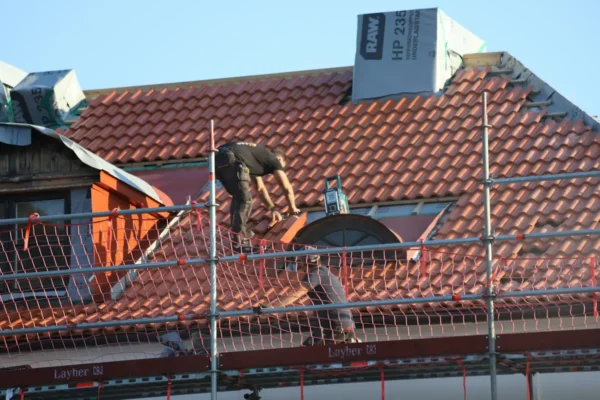
Roof repair cost in Berkshire: what moves the price
Indicative ranges for roof and gutter repairs across Berkshire, the factors that push a quote up or down, and how to tell a fair…
 Roofing & gutters · Buckinghamshire
Emergency roof repair in Buckinghamshire: the first hour
A storm has lifted tiles or water is pouring through a ceiling. Here is what to do in the first hour, how to find…
 Roofing & gutters · Guildford
How to choose roofers in Guildford: vetting and red flags
Roofing is unregulated, so the vetting is down to you. How to check roofers in Guildford for competence, insurance and honesty before you hand…
 Roofing & gutters · Woking
Before you call a roofer in Woking: checks to do first
A damp patch does not always mean a roof problem. The checks you can safely make from inside and from the ground before booking…
 Roofing & gutters · Birmingham
Autumn roof and gutter checks before you need a roofer in Birmingham
The weeks between leaf fall and the first hard frost are the best time to deal with gutters and roofs. What to check, what…
 Roofing & gutters · Manchester
Gutter cleaning in Manchester: why overflowing gutters damage walls
A gutter that overflows is not a cosmetic problem. How blockages happen, what the water does to brick, timber and plaster, and how cleaning…
All roofing & gutters reading, every area ↗
Roofing & gutters explained
Roofing and gutter work covers everything that keeps water moving off your house and away from the walls. That includes slipped or broken tiles, ridge and verge repairs, flat roof patching and recovering, and leaks showing as damp patches indoors. It also covers gutter clearing and replacement, new fascias and soffits, and chimney and flashing repairs where the roof meets brickwork.
Almost all of this is a professional job, because the danger sits in the access rather than the repair. HSE reports that falls from height remain the most common cause of fatal injury to workers in Britain. A roofer arrives with scaffolding, a tower or a powered platform and proper edge protection. Householders should not climb onto a pitched roof, a fragile garage sheet or an unknown flat roof.
British roofs vary enormously, and so does the work. A Victorian terrace in slate, a 1930s semi in clay tiles and a 1970s house in concrete interlocking tiles all behave differently. Flat roofs on extensions and garages fail in another way again. Wind driven rain, autumn leaf fall and winter freeze and thaw all find the weak point, which is why most leaks appear after a storm.
What moves the price
- Access and scaffolding hire
- Scaffolding to one elevation of a two storey house typically runs £600 to £1,500 for the hire period, while a full wrap around scaffold is more often £2,000 to £4,000.
- Roof covering material and pitch
- Natural slate and handmade clay cost far more to buy and lay than concrete tiles, so re covering a pitched roof commonly lands between £130 and £280 per square metre.
- Spot repair or full replacement
- A few slipped tiles refitted on an easily reached roof might be £150 to £350, where a full re roof on a semi detached house is more often £7,000 to £15,000.
- Gutter, fascia and soffit runs
- Clearing gutters on a semi usually costs £70 to £180, while replacing guttering with new fascias and soffits runs about £60 to £120 per metre fitted.
- Chimney, flashing and leadwork
- Renewing lead flashing typically costs £350 to £900 and repointing a chimney £500 to £1,400, with shared stacks on a party wall sometimes needing notice under the Party Wall etc. Act 1996.
Figures are indicative typical ranges for the UK, not quotes. Always get written quotes before work starts.
Before you enquire
- Note when the leak started and what the weather was doing.
- Photograph the damp patch inside and the roof from ground level.
- Clear parking and side access so scaffolding or a tower can go up.
- Check whether the property is listed or in a conservation area.
Common questions
How much does it cost to fix a leaking roof in the UK?
Cost depends far more on access than on the leak itself. A single slipped tile refitted from a safely footed ladder might be £150 to £350, while anything needing scaffolding adds roughly £600 to £1,500. A roof survey to trace the source costs about £150 to £400 and is worth paying for when the cause is not obvious from the ground.
Is it safe to clean your own gutters?
Clearing gutters from the ground with an extendable pole or a gutter vacuum is reasonable on a bungalow. Working off a ladder at first floor height is not, and standing on the gutter line or the roof itself is never safe. HSE guidance treats ladders as suitable only for short, light work with three points of contact maintained. If you cannot reach the gutter from the ground, pay someone who has the right access equipment.
Do I need planning permission to replace my roof?
Repairing or re covering a roof in a similar material is normally permitted development and needs no planning permission. It does usually need Building Regulations approval, because renewing more than 25 percent of the covering triggers an insulation upgrade notified through your local authority building control. Listed buildings need listed building consent, and a conservation area or an Article 4 direction can restrict which materials you may use. Ask your local council before anything is ordered.
Does buildings insurance cover a roof leak?
Storm damage, such as tiles stripped off in high wind, is normally covered by a buildings policy. Leaks traced to gradual wear, blocked gutters or missed maintenance are usually excluded, because insurers treat those as upkeep. Photograph the damage, keep any fallen debris, and speak to your insurer before you commission the permanent repair. Temporary work to make the roof watertight, often £200 to £500 for a sheeted cover, is normally accepted, so keep that invoice.
Local roofing & gutters guides
The same service, written for where you live: typical local prices, the housing stock and the trades that cover it.