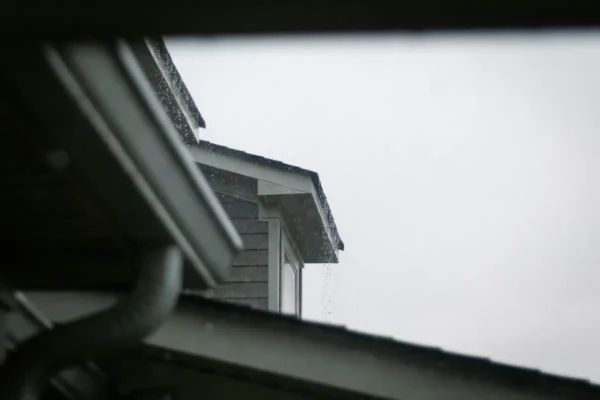
By the second week of November most of the leaves are down, and the heavy rain that follows is what turns a blocked gutter into a damp wall. Gutter cleaning is one of the cheapest jobs on the house and one of the most often skipped. This guide explains why November is the right month, what overflowing gutters do to brickwork and foundations, what a clear costs in different parts of the country, and when a ladder is a bad idea.
Why November rather than October or January
The timing is about leaves and rain. Clear gutters in early October and the oaks and sycamores will refill them within a fortnight. Leave it until January and every storm in between has pushed water down the walls. The Met Office records the wettest months in most of the UK between October and January, so a clear in mid to late November catches the gutters full and empties them before the worst of the winter rainfall.
Search interest in gutter cleaning is steady all year and rises in autumn, which means good operators are busiest in November and December. Booking in the first half of the month is easier than the week before Christmas. If you have a lot of mature trees overhead, a second clear in late spring deals with blossom, seed cases and moss that has slid off the roof.
What overflowing gutters do to a house
A gutter exists to move water away from the walls. When it blocks, water spills over the front edge and runs down the brickwork, or backs up behind the fascia and into the roof timbers. The damage is slow and expensive rather than sudden.
- Saturated brickwork that stays wet through winter, which leads to spalling faces and internal damp patches on the upstairs wall.
- Rotten fascia boards and soffits where the overflow runs behind the gutter, and eventually a rotten rafter end.
- Water pooling at the base of the wall, which can bridge the damp proof course and show as damp in the ground floor room.
- Ice in a blocked gutter in a cold snap, which adds weight and can pull brackets out of the fascia.
Our guide to why overflowing gutters damage walls goes into the brickwork problem in more detail. The short version is that a £100 clear prevents a repair that runs into four figures.
Gutter cleaning cost: typical ranges across the UK
Prices vary with the size of the house, how many storeys there are, whether access is from a ladder, a pole or scaffolding, and where you live. The figures below are indicative ranges rather than quotes, and London and the south east sit at the top of each band.
- Terraced or small semi-detached house, two storeys, front and back: typically £60 to £120.
- Larger semi or detached house with a garage and extension: typically £100 to £200.
- Three storey town house or property with a conservatory roof that needs clearing too: typically £150 to £300.
- Minor gutter repair at the same visit, such as re-seating a bracket or sealing a joint: usually an extra £30 to £80.
Most operators now use a vacuum pole with a camera on the end, which clears a two storey house from the ground without a ladder and lets you see the gutter before and after. Ask for the camera footage. It is the simplest way to check the job was done. If the price seems low for a big house, ask whether downpipes are included, because a clear gutter draining into a blocked downpipe still overflows.
Doing it yourself: safety first
Clearing gutters on a bungalow or a low single storey extension is a reasonable job for a householder with a stable ladder and someone to foot it. The Work at Height Regulations 2005 apply to people at work rather than homeowners, but the Health and Safety Executive guidance behind them is sound advice for anyone: use a ladder on firm level ground, keep three points of contact, and do not work from a ladder on a wet or windy day. The HSE work at height pages set out the basics.
Two storey gutters are a different matter. A fall from six metres onto a patio is the sort of accident that fills hospital beds in November, and a ladder leaning on plastic guttering tends to crush it. If you want to do the job yourself, a gutter vacuum pole or a hose attachment with a curved end lets you clear from the ground. Otherwise this is a job to pay for.
Gutter guards, downpipes and what to check while you are there
A gutter cleaning visit is a good moment to look at the rest of the rainwater system. Run a hose into the gutter and watch where the water goes. It should move briskly to the downpipe and out of the bottom into a gully or drain. Water that sits still means the gutter has lost its fall, usually because a bracket has dropped, and that is a quick gutter repair rather than a replacement.
Gutter guards are worth considering if trees overhang the roof. Brush and foam inserts are cheap but clog on top within a season or two. Mesh guards fixed under the tiles do better but still need checking. None of them removes the need for a clear altogether; they stretch the interval. Our autumn roof and gutter checks cover the other things to look at from the ground before winter, including slipped tiles and cracked flashing.
When to call a professional
Book gutter cleaning through a professional when the house is two storeys or more, when the gutters have not been cleared in several years and are heavy with silt, or when you have seen damp on an upstairs wall and need someone to check the fascia and roof edge at the same time. Anything involving a roofer on the tiles, lead flashing or a dropped gutter run across a whole elevation needs scaffolding or a tower, not a ladder. Our roofing and gutters service page covers the full range.
If you would like a gutter clear before the winter rain, or you have an overflow that is already marking the wall, our free help desk can find someone with the right equipment and insurance. Send the details through our request help page. The team reviews every enquiry and confirms availability and credentials before anything is agreed, so nothing is booked until they come back to you.
Questions people ask
How often should gutters be cleaned in the UK?
Once a year in late autumn is enough for most houses, after the leaves have fallen and before the winter rain. Properties with mature trees overhead, or with a flat roof that sheds moss and grit into the gutter, usually need a second clear in late spring. Check from the ground after a heavy shower: water running over the front edge means it is due.
How much does gutter cleaning cost?
Typical ranges are £60 to £120 for a terraced or small semi-detached house, £100 to £200 for a larger detached property, and £150 to £300 for a three storey house or one with a conservatory to clear as well. London and the south east sit at the upper end. These are indicative figures rather than quotes and depend on access and condition.
Can I clean my gutters myself from a ladder?
On a bungalow or single storey extension, yes, with a stable ladder on firm ground, someone footing it and a dry, still day. Health and Safety Executive guidance advises against ladder work in wet or windy conditions. For two storey gutters, use a vacuum pole or hose attachment from the ground or pay a professional, because a fall from that height is serious.
Do gutter guards mean I never need to clean the gutters?
No. Guards slow the build-up and keep out the larger leaves, but silt, seeds and moss still accumulate, and brush or foam inserts clog on top. Expect to check guarded gutters every year or two rather than every autumn. Mesh guards fitted under the tile edge last longest, but they still need lifting and clearing occasionally.
Ready to take the next step?
Tell the household desk what has happened, where you are and when you need help. We will review it and explain your options.
Describe your job →Guidance is general and refers to the authority that sets each rule. Costs are indicative ranges; always get written quotes. Trade availability and credentials are confirmed when you enquire.