A sofa takes more punishment than any other piece of furniture in the house, and in a Manchester winter it also takes longer to dry once you have cleaned it. Sofa cleaning done badly leaves watermarks, shrunken covers and a smell that is worse than the one you started with. This guide explains the fabric care codes stitched under your cushions, how professionals deal with pet smells and food stains, how long the drying takes in a damp climate, and what a professional clean typically costs in Manchester.
Start with the fabric care code
Most upholstered sofas sold in the UK carry two labels. One is the permanent fire safety label required by the Furniture and Furnishings (Fire) (Safety) Regulations 1988 (guidance is on gov.uk), which tells you nothing about cleaning but confirms the filling and cover meet the flammability standard. The other is a care label, usually tucked under a seat cushion or stapled to the frame beneath, and it carries a single letter code.
- W: water-based cleaning is safe. Most polyester, microfibre and many cotton blends sit here.
- S: solvent cleaning only. Water will leave rings or cause shrinkage. Common on viscose, rayon, some linens and silk blends.
- WS: either water or solvent methods can be used, with care.
- X: vacuum or light brushing only. No liquids at all.
If there is no label, treat the fabric as S until a professional has tested a hidden patch. Leather is a separate case: it needs a pH-neutral cleaner and a conditioner, never steam or detergent. A competent cleaner will ask for the code before quoting, and if they do not ask, that tells you something.
What a professional sofa cleaning actually involves
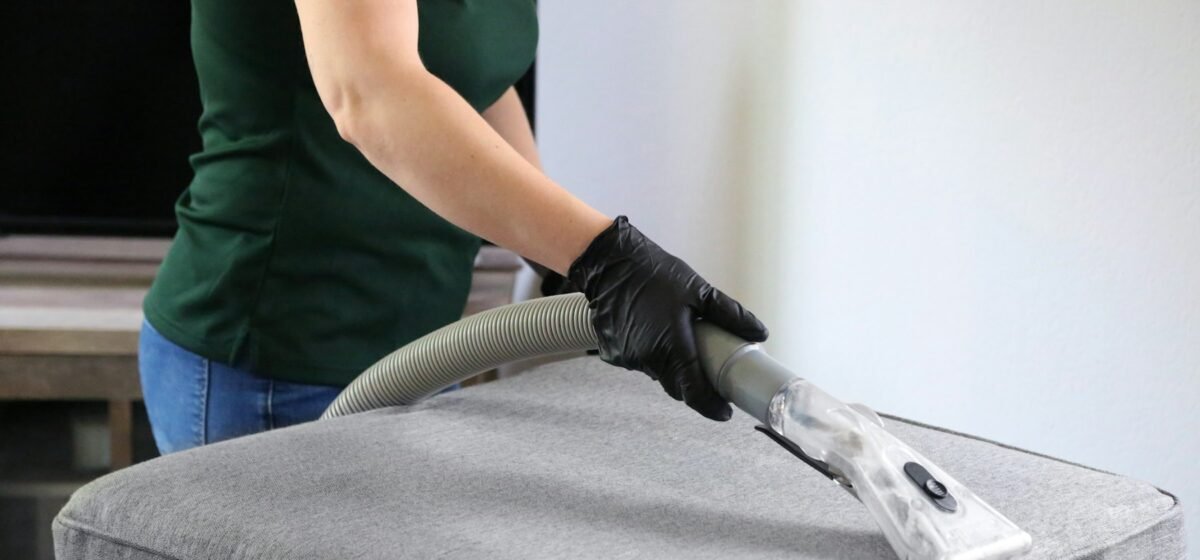
For W and WS fabrics the standard method is hot water extraction, often called steam cleaning although the water is hot rather than steam. The cleaner vacuums thoroughly, pre-treats stains and high-contact areas such as arms and headrests, then sprays a cleaning solution and extracts it with a wand. A good operator makes extra dry passes to pull as much moisture out as possible. The whole job on a three-seater takes 45 to 90 minutes.
For S fabrics the process uses a dry solvent applied with a low-moisture system, which is slower and more expensive because the products cost more and the cleaner has to work in smaller sections. Fabric protector sprays are usually offered as an extra and are worth considering on a light-coloured sofa in a house with children or pets.
Pet smells, food stains and the limits of cleaning
Pet urine is the hardest job because it soaks through the cover into the foam. Surface cleaning removes the stain but not the source, and the smell returns on the first warm day. Professionals use enzyme-based products that break down the proteins, and on a bad case they will lift the cover and treat the cushion filling directly. If the frame itself has absorbed urine, no cleaning will fully fix it.
Food and drink stains respond well if you act fast. Blot with a clean white cloth, never rub, and avoid household stain removers on S fabrics. Red wine, curry and ink are the three that most often leave a shadow even after professional treatment, so set expectations accordingly. Mould on a sofa kept in a cold, damp room is a different problem: the cleaner can treat it, but unless the room’s humidity comes down it will return.
Drying times in Manchester’s damp winters
This is where the city matters. Met Office climate averages put the north west among the wetter regions of England, and from November to February indoor humidity in an unheated room stays high. A sofa cleaned by hot water extraction typically takes 4 to 8 hours to dry in a warm, ventilated room, and 12 to 24 hours in a cold one. Leave cushions standing on their edges, keep the heating on low and open a window for an hour if the weather allows. Do not put throws or plastic over a damp sofa.
The housing stock makes a difference too. Victorian terraces in Chorlton, Levenshulme and Withington have solid walls and draughty sash windows that help ventilation but keep rooms cold, while new build apartments in Ancoats and Salford Quays are warm and airtight, so a dehumidifier helps there. In student lets around Fallowfield and Rusholme the landlord’s sofa is often an older model with no legible care label, which is a reason to insist the cleaner patch tests first.
What sofa cleaning costs in Manchester
Prices below are typical ranges for Greater Manchester, not quotes, and S fabrics and leather sit at the upper end. London and the south east run roughly a third higher.
- Two-seater: £35 to £65
- Three-seater: £50 to £90
- Corner or L-shaped sofa: £80 to £150
- Armchair: £20 to £40
- Fabric protector: £10 to £25 per seat
Most firms set a minimum call-out of £50 to £70, so cleaning one armchair alone is poor value. Combining the sofa with a carpet clean usually brings the per-item price down. If you want a wider seasonal deep clean at the same time, ask whether the firm does both, as many upholstery specialists do not do domestic cleaning and vice versa. Ask for proof of public liability insurance before anyone sprays solvent in your living room, and check the firm’s own terms on what happens if a colour runs.
When to call a professional
Vacuuming weekly and dealing with spills on the day will keep most sofas presentable for years. Call in professional sofa cleaning when the fabric has a general grey tone on the arms and seats, when a pet accident has reached the filling, when the care label says S or you cannot find one, or when a sofa in a rental needs to pass a check-out inspection. Anything involving a strong chemical smell, visible mould growth or a sofa that is damp through should go to someone with the right equipment rather than a hired machine.
The Household Daily runs a free help desk for Manchester residents that reviews your enquiry, checks availability and confirms credentials before anything is agreed. Nothing is booked until the team confirms. Browse our cleaning service hub and the Manchester area pages, or request help here. The desk is not an emergency service; if you smell gas, leave the building and call the National Gas Emergency Service on 0800 111 999, and for fire or danger to life call 999.
Questions people ask
Can you steam clean a sofa with an S fabric code?
No. The S code means solvent cleaning only, and water from a steam or hot water extraction machine can shrink the cover, leave rings or lift the dye. A professional uses a low-moisture solvent system instead. If there is no label, treat the sofa as S until a cleaner has tested a hidden patch such as the underside of a cushion.
How long does a sofa take to dry after professional cleaning?
In a warm, ventilated room a sofa cleaned by hot water extraction is typically dry in 4 to 8 hours. In a cold room in a Manchester winter it can take 12 to 24 hours. Stand cushions on their edges, keep the heating on low and ventilate briefly. A dehumidifier speeds things up in airtight modern flats.
Can professional sofa cleaning remove pet urine smell?
Usually, if the urine has reached only the cover and cushion. Cleaners use enzyme products that break down the proteins causing the smell, and will treat the foam directly where needed. If the frame or the webbing has absorbed urine over months, cleaning reduces the smell but may not remove it completely, and replacing the cushion filling is the realistic fix.
How much does sofa cleaning cost in Manchester?
Typical ranges in Greater Manchester are £35 to £65 for a two-seater, £50 to £90 for a three-seater and £80 to £150 for a corner sofa, with most firms applying a minimum call-out of around £50 to £70. These are indicative figures, not quotes. Solvent-only fabrics and leather cost more, and prices in London and the south east run higher.
Ready to take the next step?
Tell the household desk what has happened, where you are and when you need help. We will review it and explain your options.
Describe your job →Guidance is general and refers to the authority that sets each rule. Costs are indicative ranges; always get written quotes. Trade availability and credentials are confirmed when you enquire.