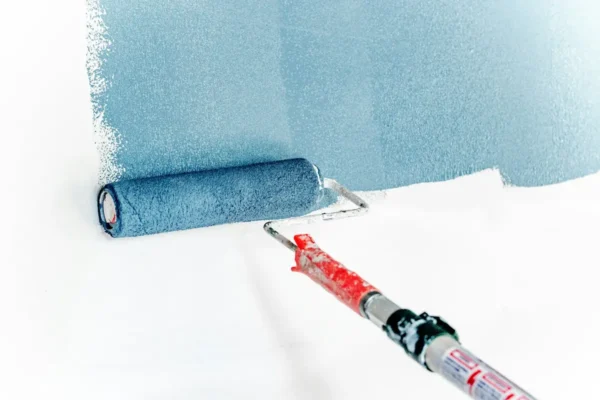
Paint that peels, flakes or bubbles within a year or two of going on is the single most common reason people in Woking ring a painter and decorator about a room that was decorated recently. It is rarely the paint’s fault. Interior painting in Woking’s 1930s semis, post-war council-built houses and newer town-centre apartments fails for a handful of predictable reasons, and the fix depends entirely on which one you have. This explainer sets them out in order of how often they turn up.
How interior paint is supposed to work
Emulsion bonds to a wall by soaking a little way into a porous, clean, dry surface and then forming a film as it dries. Anything that stops it soaking in (grease, dust, a glossy old finish), anything that pushes it back off (moisture coming through from behind), or anything that moves underneath it (loose old paint, failing plaster) will cause a failure. Once you look at a peeling wall with that in mind, the cause is usually obvious.
The five common causes
1. Moisture behind the paint
The most frequent cause, and the one that comes back if you simply repaint. Condensation in bathrooms and kitchens, a leaking shower seal, a cracked external render allowing rain through, or rising damp at the base of a solid wall all push moisture through the plaster. The paint lifts in blisters or peels in sheets, often with a tide mark or black mould. The fix is to find and stop the water first, let the wall dry, then repaint with the right product. A local painter and decorator who is honest will tell you to call a plumber or builder before they start.
2. Distemper or old whitewash
Many 1930s and earlier houses in Woking still have ceilings and sometimes walls finished in distemper, a chalky, water-soluble coating that was standard before modern emulsion. Paint over it and the new coat bonds to the chalk, not the plaster, and peels off in strips. The test is simple: wipe a damp cloth across the surface and see if it comes away white and powdery. The fix is to wash off as much as possible and seal the surface with a stabilising primer before painting.
3. Painting over gloss or silk without preparation
Old silk emulsion, gloss paint on woodwork and some vinyl finishes are too smooth for a new coat to grip. The new paint sits on top, looks fine for months and then flakes, usually around light switches and corners where it gets touched. The fix is a proper key: a light sand and a wipe down, or an adhesion primer where sanding is impractical.
4. New plaster painted too soon or wrongly
Fresh plaster needs to dry out fully and then take a mist coat of watered-down emulsion before full coats go on. Skip the mist coat, or use a vinyl paint on plaster that is still drying, and the paint will peel in large flakes with the pink of the plaster showing underneath. The fix here is unfortunately to strip back and start again.
5. Movement and failing plaster
Hairline cracks that reopen, paint that comes away with a layer of plaster attached, and bulging areas that sound hollow when tapped all point to the plaster rather than the paint. Filling the crack and repainting will last a season. The proper fix is to cut out and replaster the failed area, which a painter decorator near me search will find many decorators willing to do for small patches, while larger areas need a plasterer.
What is different in Woking
Woking’s housing is dominated by 1930s and post-war estates, with a growing number of new apartment blocks in the town centre. The 1930s semis often retain original lath-and-plaster ceilings and distempered surfaces upstairs, which catch out anyone who paints straight over them. The post-war council-built houses commonly have sand-and-cement render internally that was never intended to be smooth, so peeling there is often down to a thick build-up of old coats. The town-centre apartments are modern plasterboard, where the usual culprit is condensation from drying clothes indoors in well-sealed flats with limited ventilation. Woking Borough Council’s housing team publishes guidance on condensation and mould for tenants, and the advice applies equally to owner-occupiers: ventilate, heat evenly and fix leaks promptly.
When to call a professional
Scraping and repainting a small patch of flaking emulsion is a reasonable job for a householder. Call a trade when the cause is moisture you cannot trace, when the area is large, or when the ceiling is textured. Textured coatings in homes built before 2000 may contain asbestos and the HSE advises they should not be sanded or scraped without testing. Pre-1970s gloss may contain lead, so avoid dry sanding it. If the peeling is around a socket, switch or light fitting that is damp, have an NICEIC, NAPIT or similarly registered electrician check it; any new circuit or consumer unit work in England is notifiable under Part P of the Building Regulations. Peeling around a boiler, flue or gas fire should be looked at by a Gas Safe registered engineer before anyone paints it. Painters and decorators are not damp specialists, and a good one will say so.
Getting it fixed properly
Ask any painter and decorator near me result to tell you what they think caused the failure before they quote. A quote for a repaint with no diagnosis is a quote for the same problem next year. As a rough guide, stabilising and repainting a single affected wall is a small job; a whole ceiling with distemper or a plaster repair is a day or two. Always get the scope and price in writing.
If you have peeling paint and are not sure why, describe the room, the age of the house and what you can see to The Household Daily help desk and we will help you take the next step.
Questions people ask
Why does paint peel off my bathroom ceiling?
Almost always condensation. Warm, wet air meets a cold ceiling, the moisture soaks into the paint film and lifts it. Improve ventilation with an extractor that actually runs, let the ceiling dry fully, then repaint with a bathroom-grade emulsion.
What is distemper and how do I know if I have it?
Distemper is a chalky, water-soluble finish common in houses built before the 1950s. Wipe the surface with a damp cloth; if it comes away white and powdery, it is distemper and needs washing off and sealing before you paint.
Can I just paint over peeling paint?
No. New paint bonds to whatever is underneath, so it will peel with the old layer. Scrape back to a sound edge, sand, fill, prime and then paint.
How soon can new plaster be painted?
When it has dried to a uniform pale colour with no dark patches, typically a few days to a few weeks depending on thickness and ventilation. Apply a mist coat of watered-down emulsion first, then full coats.
Ready to take the next step?
Tell the household desk what has happened, where you are and when you need help. We will review it and explain your options.
Describe your job →Guidance is general and refers to the authority that sets each rule. Costs are indicative ranges; always get written quotes. Trade availability and credentials are confirmed when you enquire.