
The most common house clearance problem is not a hoarded property or a dangerous one. It is an ordinary family home, lived in for thirty or forty years, that now has to be emptied by relatives who live elsewhere, work full time and have never arranged a house clearance in Reading, Berkshire, or anywhere else. The job feels impossible because nobody has explained how it works. This article does that.
Why the ordinary home is the hard one
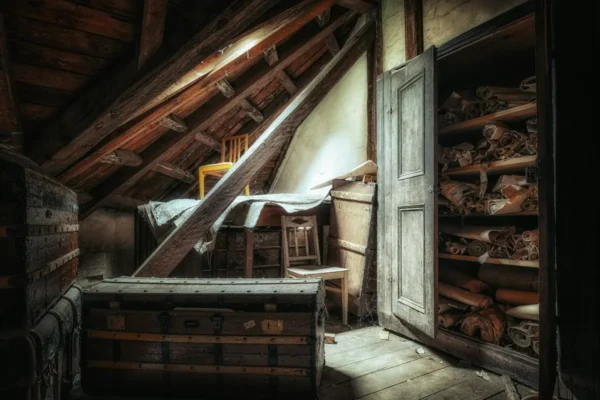
Three things combine. The first is volume: a home occupied for decades accumulates in every cupboard, loft and garage, and the rooms you can see are perhaps half of it. The second is distance: the people responsible are often an hour or more away, visiting at weekends and trying to sort one room at a time, which turns a job of days into one of months. The third is emotion. Every box contains a decision, and decisions made alone in a cold house are slow. Firms that specialise in house clearance after death see this pattern constantly, and the process they use is designed around it.
How does house clearance work?
- Survey and quote. The firm looks at the property in person or through your photographs and video, including the loft, garage, shed and garden, and gives a written quote based on estimated van loads, weight and access.
- Agree the scope. You confirm what stays, what must be set aside for the family, and what happens to anything of value or anything unexpected the crew finds. On a probate house clearance the executor should sign this off.
- Sorting. Either you do this beforehand or you pay the firm to do it with you. Contents are divided into keep, sell, donate, recycle and dispose. Good firms will tell you honestly which furniture has resale value and which does not.
- Clearance day. A crew sized to the volume arrives with a van. Bulky furniture goes first, then boxed contents, then the loft and outbuildings, then a sweep through. A full family house is usually one long day or two.
- Disposal and paperwork. Reusable items go to charity or resale, recyclables to licensed recyclers and the remainder to a licensed transfer station. You receive an invoice and a waste transfer note.
That is the whole answer to how does a house clearance work. The complexity is not in the process but in the decisions before it.
The decisions that slow everything down
Families stall on the same points. Who has authority: if the owner has died, the executor does, and GOV.UK explains how probate works and what an executor may do before the grant is issued. Whether things are valuable: most are not, and a local auction house or valuer will tell you quickly which pieces are worth selling separately. What to do with photographs and papers: remove them before the crew comes, every time, because once they are in a van they are gone. Who pays: normally the estate, from the sale proceeds or from funds the executor can access.
Settling these before the firm is booked turns a drawn-out clearance into a scheduled one.
What is different in Berkshire
Berkshire’s housing stock is more uniform than London’s, and that shapes the clearance. Reading, Bracknell and Slough have large 1960s to 1980s estates with built-in wardrobes, integral garages and gardens of a manageable size, which means moderate volumes and good van access. Windsor and Maidenhead have more older property and more flats in converted houses, where stairs and parking slow things down. Newer developments across the county, especially the apartment blocks near stations, come with management companies that control lift use, loading bays and working hours, so the firm needs to speak to the managing agent before the day.
Berkshire has no county council. Each of the six unitary councils, Reading Borough Council, Bracknell Forest, Slough, the Royal Borough of Windsor and Maidenhead, Wokingham and West Berkshire, runs its own bulky waste collection and its own recycling centres with its own rules on booking, vehicle types and permitted waste. Residents of one borough cannot assume access to the sites of another. For a few large items the local bulky collection is often the cheapest route; for a full house it is a private firm. The same firms generally handle office clearance in Berkshire, where lift bookings and building access are controlled by the landlord rather than the tenant.
When to call a professional
A clearance crew removes contents. It does not disconnect services. Gas cookers and fires must be disconnected by a Gas Safe registered engineer before they are moved. Hard-wired appliances, electric showers and storage heaters need a competent electrician, and anything touching the consumer unit is notifiable under Part P of the Building Regulations. Homes built before 2000, which covers almost all of Berkshire’s estate housing, may contain asbestos in textured ceilings, floor tiles, soffits and garage roofs; the HSE guidance is not to disturb it. Anyone removing waste for payment must be registered with the Environment Agency, and you keep a duty of care for the waste until a registered carrier takes it and gives you a transfer note.
What a finished house clearance in Reading, Berkshire looks like
- Every room, cupboard, loft and outbuilding empty.
- Floors swept and the property left broom clean, if that was agreed.
- Keep items set aside where you asked.
- An invoice and a waste transfer note in your hand.
- Keys returned and meters read.
If the property you need to clear is a long way from where you live, describe it to The Household Daily’s help desk and we will help you take the next step.
Questions people ask
How does house clearance work after a death?
The executor confirms the scope, documents and valuables are removed, the firm quotes from a survey or photographs, clears the property in one or two days and gives you an invoice and a waste transfer note. GOV.UK explains the executor's role.
Do I need to sort the house before the clearance firm comes?
You must remove documents, valuables and anything you want to keep. Beyond that, you can either sort yourself or pay the firm to sort with you on the day.
Which council handles bulky waste in Reading?
Reading Borough Council. Berkshire has six unitary councils and each runs its own bulky collection and recycling centres with separate rules, so check the one for the property's address.
How long does a full house clearance take?
A family house is usually one long day or two with a crew of two or three. Lofts, garages and gardens add the most time.
Ready to take the next step?
Tell the household desk what has happened, where you are and when you need help. We will review it and explain your options.
Describe your job →Guidance is general and refers to the authority that sets each rule. Costs are indicative ranges; always get written quotes. Trade availability and credentials are confirmed when you enquire.