Booking roof repair in London involves more than finding a roofer and agreeing a date. Terraced streets, controlled parking, shared roofs, leasehold rules and conservation areas each add a step, and missing one can stall the job on the morning it is due to start. This checklist runs through what to sort out before the day, what to confirm with the roofer, what to do on the day itself and what to keep afterwards.
Two weeks before: permissions and paperwork
- Check who owns the roof. In a purpose-built block or a converted house the roof is almost always the freeholder’s or management company’s responsibility. Report the fault to the managing agent and get written confirmation of who is arranging and paying before you instruct anyone yourself. A leaseholder who commissions work on a shared roof without consent can end up liable for it.
- Conservation areas and listed buildings. Many London boroughs have extensive conservation areas and some have Article 4 directions that remove permitted development rights for front roof slopes. Like-for-like repair is normally fine; changing material or adding rooflights may not be. Ask the borough’s planning team if in doubt.
- Building control. Re-covering more than a quarter of a roof requires building control approval because insulation must be brought up to standard. Confirm that the roofer is registered with a competent person scheme; if not, you need to notify the borough.
- Party walls. On a terrace, work to a shared parapet, valley gutter or chimney stack that straddles the boundary may fall under the Party Wall etc. Act 1996. A simple repair rarely does, but talk to the neighbour early either way.
- Insurance. If you are claiming for storm damage, get the insurer’s agreement before permanent work starts and ask what evidence they need from the roofer.
One week before: access and logistics
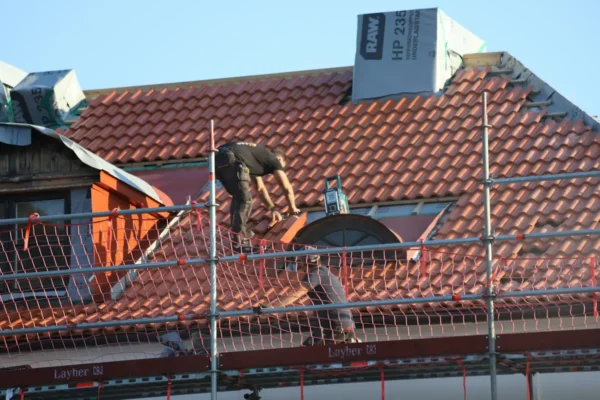
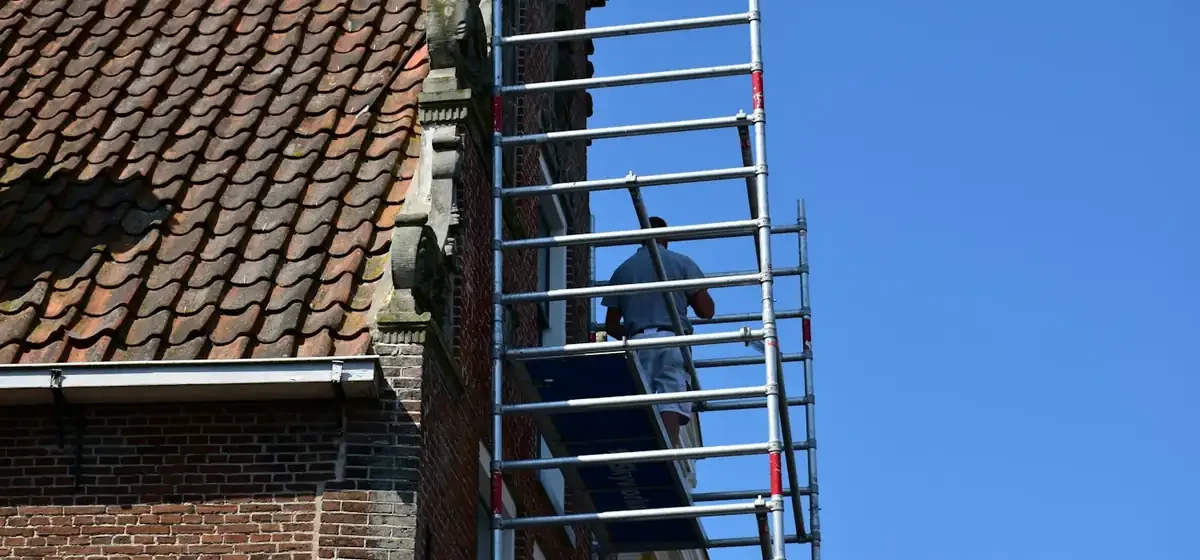
- Scaffold licence. Scaffolding on the pavement or highway needs a licence from the borough. Roofing companies in London usually arrange this through their scaffolder, but confirm who is applying and allow for the lead time.
- Parking. Most inner London streets are controlled parking zones. The roofer will need a bay suspension for a van or a skip, which is applied for through the council and takes several working days. Agree who applies and who pays.
- Skip or waste. A skip on the road needs a skip permit from the borough. If the roofer is bagging waste and taking it away instead, confirm they are a registered waste carrier.
- Neighbours. Tell the people either side and, in a terrace, behind. Scaffolding may need to oversail a neighbour’s land and ladders may need to go up a shared side return.
- Access to the rear. On terraces with no side access everything comes through the house, so clear the hallway and protect floors.
What to confirm with the roofer
- The written quote describes the scope, materials, access method, waste removal, guarantee and payment terms, and both of you have signed it.
- Public liability insurance is current; you have seen the certificate.
- Start date, expected duration and what happens if the weather stops work.
- Who is on site each day and who your contact is.
- Whether gutter cleaning in London prices are included while the scaffold is up, and whether fascias and soffits are being checked.
- For flat roof repairs in London on a rear extension, which system is being used and what the manufacturer’s guarantee requires.
What is different in London
London’s housing is overwhelmingly Victorian and Edwardian terraces, interwar semis in the outer boroughs, purpose-built flats of every era and a very large number of houses converted into flats. The result is that most London roofs are shared in some way: a terrace roof is one continuous structure, a converted house has one roof and several leaseholders, and a block has a roof that nobody living beneath it owns. Roofers in London spend a great deal of time on butterfly roofs and central valley gutters, which are hidden behind parapets on many Victorian terraces and are the most common source of leaks because they fill with debris. Space is the other constant: no front garden to speak of, no side access, permit parking and a pavement that is also the only place for a scaffold. The 32 boroughs each run their own highways, parking and building control services, so rules and lead times for a scaffold licence or a bay suspension vary from borough to borough.
On the day
- Move cars from suspended bays the night before and photograph the suspension signs.
- Clear the loft hatch area and move anything stored directly under the work.
- Take photographs of the roof, gutters and ceilings before work begins.
- Keep pets indoors and away from ladders and the scaffold base.
- Ask for photographs of the problem once the roofer is up and before anything is covered.
When to call a professional
All of this assumes the work itself is left to roofing contractors in London with the right equipment. The Health and Safety Executive treats roof work as high risk; scaffolding or a tower with edge protection is the norm for anything beyond a ground-floor flat roof. Pre-2000 buildings, which is most of London, may contain asbestos cement in soffits, garage roofs and old flat-roof sheets, and older blocks may have asbestos in roof voids; a competent roofer will stop and arrange testing rather than disturb it. Roofing waste must leave with a registered waste carrier under Environment Agency rules and you should keep the transfer note. Where a leak has reached wiring, a registered electrician should test the circuit, and consumer unit work is notifiable under Part P of the Building Regulations.
Afterwards: what to keep
File the signed quote, invoice, guarantee, waste transfer note, any building control certificate and the before-and-after photographs together. Roof repairs in London come up at sale, when a buyer’s survey asks when the roof was last worked on.
If you need help finding roofers in London for the job on your list, describe the work to The Household Daily’s help desk and the team will help you take the next step.
Questions people ask
Do I need permission for scaffolding on a London pavement?
Yes. Scaffolding on the public highway needs a licence from the borough council. The scaffolding company normally applies, but confirm this with the roofer and allow time, as some boroughs need a week or more.
Can a leaseholder arrange roof repair on a converted flat?
Usually not without the freeholder's consent, because the roof is normally part of the building retained by the freeholder. Report the leak to the managing agent in writing and keep copies; the cost is typically recovered through the service charge.
How long does a typical roof repair in London take?
A tile or flashing repair is often a half day once access is in place. Scaffolded jobs take longer because of erection and dismantling, and lead times for licences and parking suspensions can add a week or two before the start date.
Is a skip permit needed for roofing waste?
A skip placed on the road needs a permit from the borough. A skip on your own drive does not. If the roofer bags the waste and takes it away, they must be a registered waste carrier.
Ready to take the next step?
Tell the household desk what has happened, where you are and when you need help. We will review it and explain your options.
Describe your job →Guidance is general and refers to the authority that sets each rule. Costs are indicative ranges; always get written quotes. Trade availability and credentials are confirmed when you enquire.