Bromley is London’s largest borough by area and most of it was built between the wars or just after, as the railway suburbs of Petts Wood, Orpington, West Wickham, Beckenham and Hayes spread across what had been Kent countryside. That gives roof repairs in Bromley a particular character: hipped roofs with lots of ridge and hip mortar, big detached houses with valleys and several chimneys, flat-roofed extensions on almost every street, and long runs of guttering around large footprints. This guide takes each type in turn and explains what tends to go wrong and what the fix usually involves.
The interwar semi
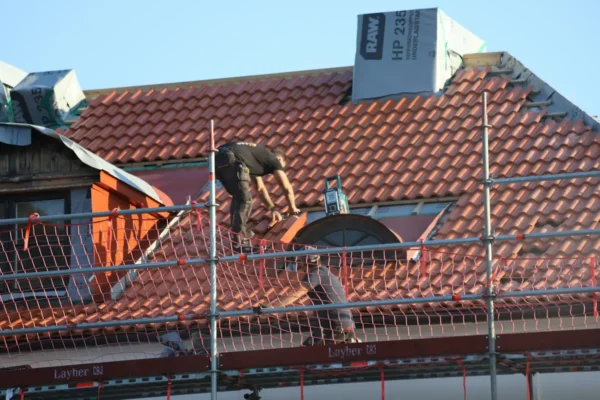
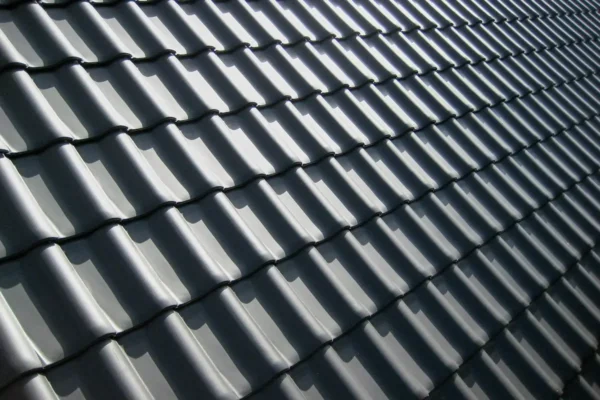
The 1930s semi is Bromley’s standard house. The roof is usually hipped rather than gabled, covered in clay or concrete tiles, with a bay window roof at the front and a single chimney stack shared with the neighbour. Hipped roofs have far more mortar than a simple gable: the ridge plus two long hips, all bedded in cement that is now 85 to 95 years old. That mortar cracks, lets water in, and eventually the hip tiles slip. Re-bedding or replacing with a dry-fix system is the most common job roofers in Bromley do on these houses. The second is the bay roof, a small lead or tiled roof that is often forgotten until the plaster above the front window stains. The third is the original underfelt, where there is any, which perishes and tears; once it has gone, every slipped tile becomes a leak. A full re-roof on these houses often makes sense when the tiles are at the end of their life, and that is when building control must be involved because the loft insulation has to be brought up to standard.
The larger detached house
Around Chislehurst, Bickley, Keston and parts of Beckenham the housing runs to large detached properties from the Edwardian period through to the 1960s. These roofs have multiple pitches meeting in valleys, two or three chimneys, dormers and often several different coverings added over decades. Valleys are the weak point: lead valleys split with age, and tiled valleys block with leaves from the mature trees that are one of the borough’s defining features. Chimney flashings and flaunching fail on every stack, and the more stacks the more work. Roof cleaning in Bromley is frequently requested on these houses because moss grows thickly under tree cover; gentle removal and a biocide treatment is reasonable, pressure washing is not, because it strips the surface of concrete tiles and drives water under them. These houses nearly always need scaffolding, so it pays to have everything looked at in one visit.
Flat roofs on extensions and garages
Nearly every Bromley house has a flat roof somewhere: a rear kitchen extension, a garage, a porch or a dormer top. Flat roofing in Bromley is a specialism in its own right. Felt roofs from the 1970s to 1990s have typically reached the end of their life, showing blisters, cracks, ponding and growth. The modern options are EPDM rubber, GRP fibreglass or a high-performance felt, each of which should come with a manufacturer’s guarantee when fitted by an accredited installer. Replacement is the point at which insulation must be added to meet Building Regulations, which raises the roof level slightly and sometimes affects the door threshold or window sill above. Garages built before 2000 may have asbestos cement sheet roofs, which need appropriate removal rather than replacement over the top.
Guttering on larger footprints
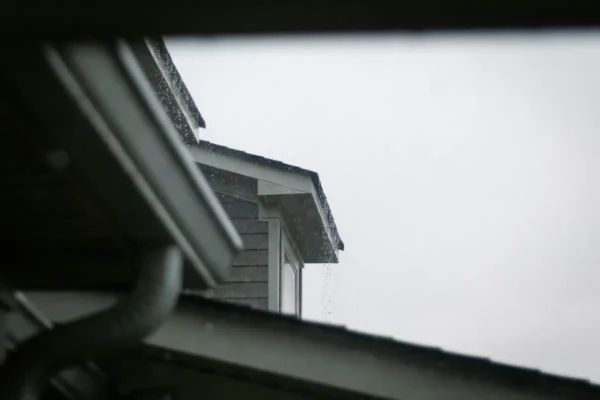
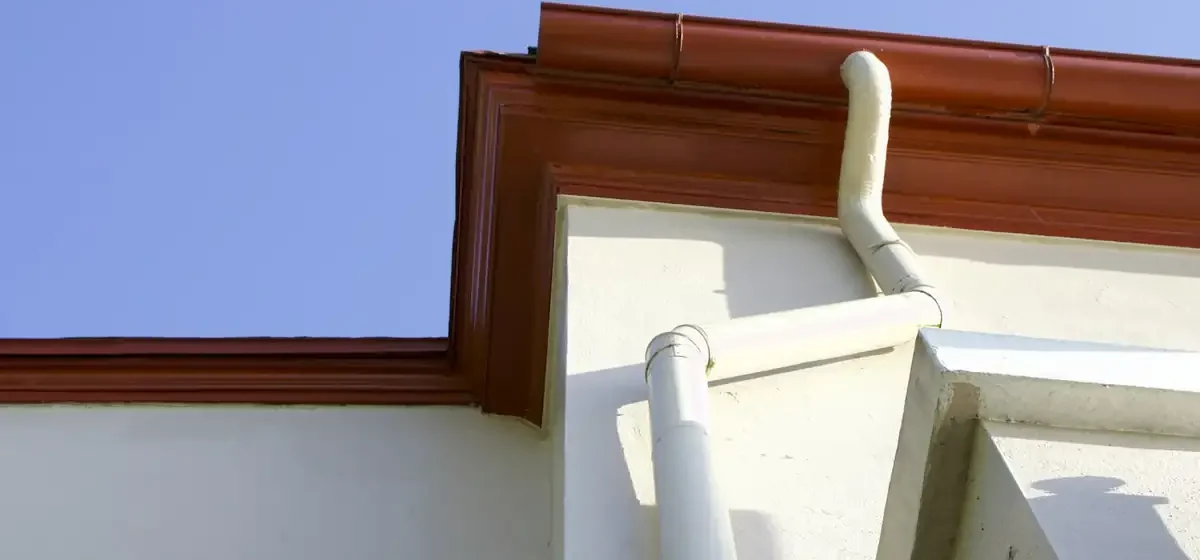
Guttering in Bromley works harder than in a tightly packed inner London terrace because the houses are bigger and the trees are closer. A detached house may have 40 metres or more of gutter with several downpipes, and a hipped roof sheds water on all four sides. Blockages from leaves and moss are constant, and the hopper heads on older houses fill with debris. Original cast iron survives on many Edwardian houses and can be refurbished; on interwar semis the uPVC fitted in the 1980s has often gone brittle and the brackets have pulled out of fascia timber that was never replaced. Replacing fascias, soffits and gutters together while the scaffold is up for roof work is a common and sensible package.
What is different in Bromley
Bromley’s housing stock is older on average than many outer London boroughs and its roofs are nearing the end of their design life at the same time, which is why so many streets have scaffolding on them. Gardens are larger, which makes access easier than in inner London but means mature trees overhang roofs and fill gutters. Parking is generally off-street, so bay suspensions are rarely needed, though scaffolding on a pavement still needs a licence from Bromley Council. The council has conservation areas in Chislehurst, Beckenham, Bickley and elsewhere, and some have Article 4 directions that restrict changes to roofing materials on visible slopes. Emergency roof repairs in Bromley spike after south-westerly gales, which hit the higher ground around Biggin Hill and Keston first; the Met Office’s wind warnings for London usually apply to the whole borough.
When to call a professional
Every job described here is work at height and should be done by roofing contractors with scaffolding or a tower; the Health and Safety Executive is clear that domestic roof work from an unsecured ladder causes serious injuries every year. Pre-2000 houses, which is almost all of Bromley, may contain asbestos cement in soffits, garage roofs and old flat-roof sheets, and roofers should identify it and arrange suitable removal. Roofing waste must leave with a waste carrier registered with the Environment Agency, and the householder’s duty of care means asking for the registration. Where a leak has reached wiring, a registered electrician should test the circuit before it is used, and any consumer unit replacement is notifiable under Part P of the Building Regulations.
If you would like help finding roofers in Bromley for a semi, a detached house or a flat roof, describe the job to The Household Daily’s help desk and the team will help you take the next step.
Questions people ask
How long does a 1930s tiled roof last?
Clay tiles can last well over a century; concrete tiles typically 50 to 70 years. The mortar on ridges and hips and the underfelt usually fail long before the tiles do, which is why most repairs on interwar houses involve re-bedding rather than re-tiling.
Is a dry-ridge system better than mortar?
Dry-fix ridge and hip systems use mechanical fixings and ventilated closures instead of cement, so they do not crack or need re-bedding. They are now standard on new roofs and are a sensible upgrade when ridge mortar fails on an older house.
Do I need planning permission to replace a flat roof in Bromley?
Not for a like-for-like replacement. Building control approval is needed because insulation must meet current standards. In a conservation area with an Article 4 direction, check with Bromley Council before changing the material on a visible roof.
Should roof moss be removed?
Thick moss holds water, blocks gutters and valleys, and speeds frost damage. Removal by hand or soft brushing with a biocide treatment is reasonable. Avoid pressure washing, which damages tiles and forces water into the roof.
Ready to take the next step?
Tell the household desk what has happened, where you are and when you need help. We will review it and explain your options.
Describe your job →Guidance is general and refers to the authority that sets each rule. Costs are indicative ranges; always get written quotes. Trade availability and credentials are confirmed when you enquire.