An overgrown garden is the commonest reason people search for garden clearance in Croydon. The house has been empty, a tenant has left, a relative could no longer manage, or the summer simply got away from you, and what was a lawn with borders is now brambles to the fence line. This explainer covers why gardens get out of hand so fast, what a professional clearance actually involves, and what to decide once the ground is visible again.
Why a garden goes from neglected to impassable
A garden left alone follows a predictable sequence. In the first summer the lawn grows long and the borders fill with annual weeds. By the second, perennial colonisers arrive: bramble, which can grow several feet in a season and roots wherever a stem touches the ground; bindweed, which smothers shrubs; ivy, which climbs fences and walls and holds moisture against the timber; and buddleia and sycamore seedlings, which arrive on the wind and are small trees within three years. Anything that was already there grows unchecked, so a privet hedge becomes a row of trees and a conifer planted as a screen reaches the gutter. By the third year the structure of the garden, its paths, edges and beds, has disappeared and the only way back is a clearance rather than a tidy.
Neglected gardens also attract wildlife you do not want. Long grass, wood piles and compost heaps are rat habitat, and searches for how to get rid of rats in garden spike once the undergrowth is cut back and the problem becomes visible. Rats are a pest control job, not a gardening one, but clearance is usually the first step.
What a garden clearance involves
Garden clearance is a different service from maintenance, and gardeners Croydon wide tend to split into those who do it and those who do not. A typical job runs in this order:
- Survey and quote. The contractor looks at the volume of growth, the access, what is to stay (established trees, a shed, a good hedge) and whether anything is hazardous. Quotes are usually a fixed price based on labour days and waste volume.
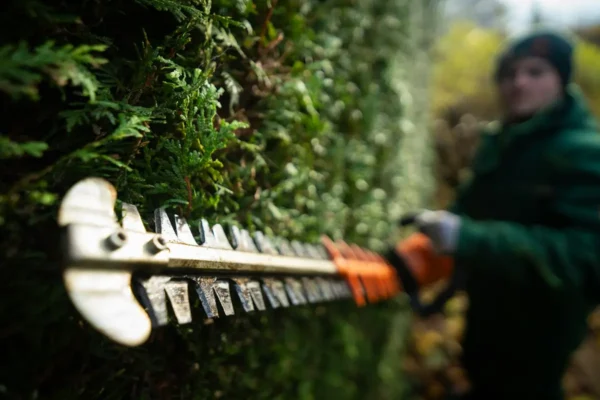
- Cutting down. Brush cutters and hedge trimmers take everything to ground level; chainsaws deal with self-seeded trees and old conifers.
- Removal. Cut material is bagged or loaded loose into a van or skip. A clearance of a standard Croydon back garden can produce several cubic metres.
- Roots and stumps. Bramble and ivy roots are dug out or treated; tree stumps are ground out or left and treated, depending on the quote.
- Making good. Rough levelling, raking and either rough grass seed or leaving the ground bare for the next stage.
What a clearance does not do is restore the garden. The lawn will need re-turfing or seeding, the beds replanting and the fences, exposed for the first time in years, often need replacing. That is where a gardener Croydon householders use for regular maintenance, or a landscaping Croydon firm for a redesign, comes in afterwards.
What is different in Croydon
Croydon’s housing stock produces two kinds of clearance job. The borough’s large interwar suburbs have 1930s semis with long back gardens, often a hundred feet or more, and side access; these are the gardens that go wild quietly at the far end while the patio stays tidy. The Victorian terraces nearer the centre and in the north of the borough have smaller gardens, usually with no side access, so everything comes through the house and the price reflects the carrying. The town centre’s flats generally have communal grounds maintained through the service charge. Soil varies: the south of the borough rises onto chalk and drains well, while the north sits on London clay that stays wet, which affects both how fast a garden regrows and whether it can be worked in winter. Croydon Council runs a paid garden waste subscription for brown bins and operates household reuse and recycling centres; a clearance produces far more than a bin holds, so the contractor’s waste carrier registration with the Environment Agency matters. Check the public register, because fly-tipping of green waste is a recurring problem across south London and the householder keeps a duty of care.
Deciding what happens next
Once the ground is visible, you have a choice worth making deliberately rather than by default. If the house is being sold or re-let, rough grass seed and a tidy fence line is usually enough. If you are staying, a landscape gardener near me search will produce people who can turn a cleared plot into something that needs less maintenance than the original: fewer beds, a larger paved or gravelled area, slow-growing hedging rather than conifer. Whatever you choose, book regular maintenance from the start; a clearance only holds for one growing season.
When to call a professional
You can clear a small, lightly overgrown garden yourself with a brush cutter, thick gloves and patience. Call a professional when there are trees to fell or large limbs to remove, because chainsaw work and working at height need training and proper access equipment under Health and Safety Executive guidance, and because any tree covered by a Tree Preservation Order or in one of Croydon’s conservation areas needs the council’s consent first. Do not clear hedges and dense shrubs between March and August if birds are nesting, as the Wildlife and Countryside Act 1981 protects active nests. Old sheds and garage roofs on pre-2000 properties may be asbestos cement and need a licensed contractor. If you find Japanese knotweed, stop; it is controlled waste and spreads from fragments. Rats need an RSPH or BPCA qualified pest controller. And anyone removing waste must be a registered waste carrier.
If you have an overgrown garden and want help finding a clearance contractor in Croydon, describe the garden, its access and what should stay to The Household Daily’s help desk and we will help you take the next step.
Questions people ask
How long does a garden clearance in Croydon take?
A typical overgrown back garden behind a 1930s semi takes a crew one to two days to cut, remove and rough level. Terraced gardens with no side access take longer because everything is carried through the house.
Will a garden clearance get rid of rats?
It removes the cover they live in, which is the first step, but an established infestation needs an RSPH or BPCA qualified pest controller. Expect to see more activity briefly once the undergrowth is gone.
Is garden clearance waste collected by Croydon Council?
The brown bin subscription takes small amounts; a clearance produces far more. The contractor should remove it as an Environment Agency registered waste carrier, or you can take it to a council reuse and recycling centre.
Ready to take the next step?
Tell the household desk what has happened, where you are and when you need help. We will review it and explain your options.
Describe your job →Guidance is general and refers to the authority that sets each rule. Costs are indicative ranges; always get written quotes. Trade availability and credentials are confirmed when you enquire.