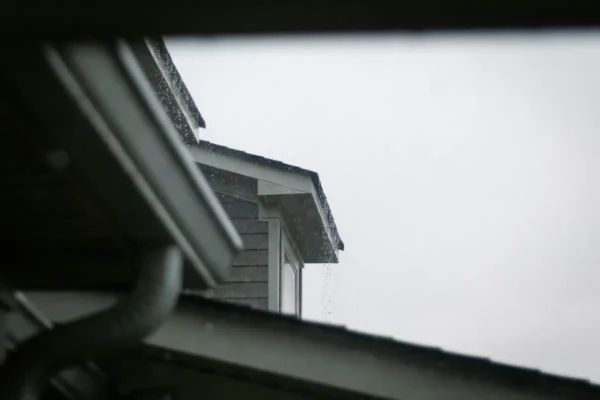
A gale across the Chilterns has taken a run of tiles off the roof, or rain is dripping through a bedroom ceiling in Aylesbury at eleven at night. Emergency roof repair in Buckinghamshire follows the same logic as anywhere else: limit the water damage inside, do not put yourself at risk outside, and get a competent roofer to make the roof watertight before worrying about the permanent fix. This guide walks through that first hour and the day that follows.
The first hour: inside the house
- Move what you can. Shift furniture, electronics and soft furnishings away from the drip. Lay towels and put a bucket or washing-up bowl under the leak.
- Relieve a bulging ceiling. If plasterboard is sagging with trapped water, place a bucket beneath it and pierce the bulge with a screwdriver so the water drains in a controlled way rather than bringing the ceiling down.
- Switch off affected circuits. If water is near a light fitting, a socket or the consumer unit, turn the relevant circuit off at the consumer unit and leave it off until an electrician has checked it.
- Get into the loft, carefully. With a torch, look for where water is entering. It often runs along rafters and drips some distance from the actual hole. Spread a plastic sheet or bin bags over the insulation under the drip to protect the ceiling below.
- Photograph everything. Your insurer will want pictures of the damage inside and, if you can safely take them from the ground, of the roof itself.
What not to do outside
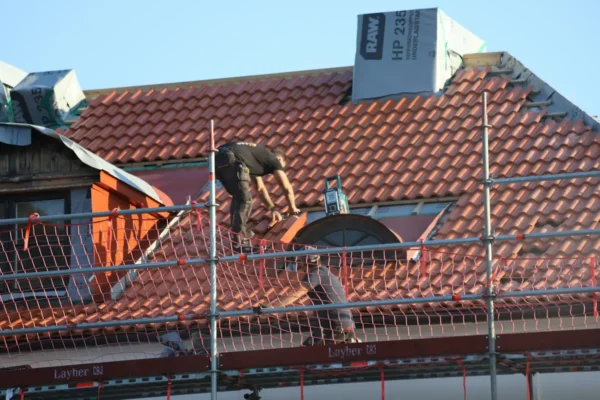
Do not climb onto the roof in wind or rain, and do not lean a ladder against guttering to have a look. The Health and Safety Executive attributes a large share of serious injuries in the home to falls from height, and a wet tiled roof is one of the most dangerous surfaces there is. Leave tarpaulins to the roofer. A sheet thrown over a ridge in a gale is more likely to blow away, or take more tiles with it, than to help.
Finding an emergency roofer fast
Searching for an emergency roofer near me at night will produce a mix of genuine local firms and national call-handling centres that pass the job to whoever is available. Neither is necessarily bad, but ask three questions before you agree to anything: what is the call-out charge, does it include the make-safe or only the inspection, and will the same firm quote for the permanent repair? A genuine emergency roof leak repair at night is usually a temporary measure: a tarpaulin weighted and tied correctly, a few tiles slid back into place, or a patch of flashing tape over a split in a flat roof. The proper repair happens in daylight, often a few days later when materials and scaffolding can be arranged.
If the leak is slow and the weather is calming, you may not need a night call-out at all. A bucket and a plastic sheet in the loft will see most homes through until morning, when roofers are cheaper and easier to find and can actually see what they are doing.
What is different in Buckinghamshire
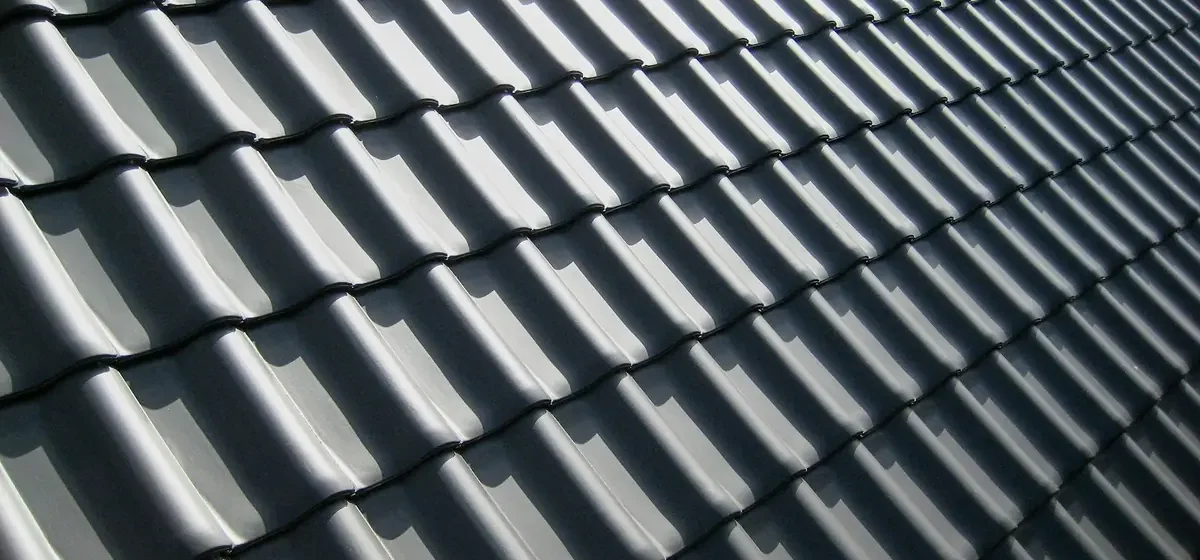
The county’s housing splits between the commuter estates of High Wycombe, Aylesbury and Milton Keynes’ neighbours and the older stock of the Chilterns: flint and brick cottages in villages around Amersham, Great Missenden and Marlow, many with handmade clay tiles or slate on steep pitches. Those older roofs are beautiful and often have no underfelt, so a single displaced tile lets water straight onto the loft floor. Exposed ridges in the Chilterns catch the wind, and the Met Office regularly issues yellow wind warnings for the area in autumn and winter storms. Buckinghamshire Council is the unitary authority for the whole county apart from Milton Keynes, and much of the Chilterns sits within a National Landscape with extensive conservation areas, so replacement tiles on a visible roof slope may need to match the original. For listed cottages, even an emergency repair should be followed up with the council’s conservation officer before permanent work begins.
When to call a professional
Any work on the roof surface, including a temporary tarpaulin, needs proper access equipment and should be done by someone trained to work at height. Roofers on an emergency call-out should still use a secured ladder or tower, and anything more than a quick patch will need scaffolding. Homes built before 2000 may have asbestos cement in garage roofs, soffits or old corrugated sheeting; if storm damage has broken these, do not sweep up the pieces, and tell the roofer so that removal is handled correctly. If water has reached wiring, the circuit should be tested by a registered electrician before it is switched back on, and any replacement of a consumer unit is notifiable under Part P of the Building Regulations. Debris removed from the roof is controlled waste and the firm taking it away should be a registered waste carrier with the Environment Agency.
After the emergency
Once the roof is watertight, contact your insurer. Storm damage is usually covered by buildings insurance, but insurers distinguish between a sudden event and a roof that was already failing, so the roofer’s report and your photographs matter. Ask the roofer for a written quote for the permanent leaking roof repair that sets out materials, access and waste removal, and get a second quote if the figure is large. Check the loft a week later for any damp smell or dark patches on timber, which can indicate a second, slower leak the storm exposed rather than caused.
If you need help finding an emergency roofer in Buckinghamshire, or a firm to do the permanent repair once the panic is over, describe the job to The Household Daily’s help desk and the team will help you take the next step.
Questions people ask
Can a roofer fix a leak properly at night?
Usually not. Night call-outs are about making the roof watertight with a tarpaulin or a temporary patch. The permanent roof leak repair is done in daylight when the roofer can see the whole slope and bring the right materials.
How much does an emergency roofer charge?
As a rough guide, expect a call-out fee that covers attendance and a basic make-safe, with the permanent repair quoted separately. Ask for the call-out charge before anyone attends and get the follow-up work in writing.
Will my insurer pay for emergency roof repair?
Most buildings policies cover sudden storm damage and reasonable emergency costs to prevent further damage. Keep receipts, photographs and the roofer's report, and contact the insurer before committing to the permanent repair.
How do I know if the whole roof needs replacing after a storm?
A storm that removes a few tiles has not condemned the roof. A roofer should inspect the underlay, battens and the general condition of the covering before recommending anything more than a repair, and you should get a second opinion if a full replacement is proposed.
Ready to take the next step?
Tell the household desk what has happened, where you are and when you need help. We will review it and explain your options.
Describe your job →Guidance is general and refers to the authority that sets each rule. Costs are indicative ranges; always get written quotes. Trade availability and credentials are confirmed when you enquire.