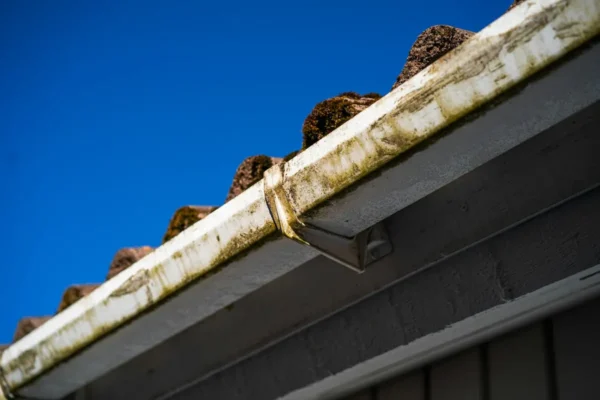

Exterior cleaning sits in an awkward place in a tenancy. Blocked gutters cause damp, and damp is the landlord’s problem; dirty windows are a nuisance, and a nuisance is usually the tenant’s. The question of who books and pays for the gutter cleaning Buckinghamshire landlords and tenants argue about comes down to the difference between repair and cleaning, and the law draws that line more clearly than most tenancy agreements do.
Gutter cleaning Buckinghamshire law: what section 11 says about gutters
Section 11 of the Landlord and Tenant Act 1985 puts an obligation on the landlord of most residential tenancies to keep in repair the structure and exterior of the dwelling, and it names drains, gutters and external pipes specifically. The obligation cannot be contracted out of in an assured shorthold tenancy. A gutter that has sagged, split, come away from the fascia or lost a bracket is a repair, and the landlord must fix it within a reasonable time once told about it. The Homes (Fitness for Human Habitation) Act 2018 adds that the property must be fit to live in throughout the tenancy; damp and mould caused by water getting into the structure is one of the hazards the Act is concerned with, and a landlord who leaves overflowing gutters to soak a wall is exposed under it. Buckinghamshire Council’s private sector housing team can inspect under the Housing Health and Safety Rating System and serve notices where damp is serious.
Cleaning versus repair: where the line usually falls
Clearing leaves from a gutter is maintenance, not repair, and section 11 does not require a landlord to do it. In practice, though, a landlord who wants the structure kept in repair has every reason to pay for a regular clear, because a blocked gutter is the cheapest problem to prevent and one of the most expensive to ignore. Most well-drafted tenancy agreements say one of three things:
- The landlord arranges and pays for gutter cleaning services on a fixed schedule, often annually.
- The tenant is responsible for keeping gutters and drains clear of debris, with the landlord responsible for repair.
- Nothing at all, in which case the tenant should report any overflow in writing and the landlord decides.
Even where the agreement puts clearing on the tenant, it cannot reasonably require the tenant to work at height. A sensible reading is that the tenant must report and may be expected to clear ground-level gullies, and the landlord must arrange anything involving a ladder. Citizens Advice guidance is that tenants should report repairs in writing, keep a copy and allow reasonable access.
Windows, patios, driveways and the deposit
Window cleaning is almost always the tenant’s cost during the tenancy, inside and out, unless the agreement says otherwise or the property is a flat where the block’s management handles exterior glass; a tenant who wants a regular window cleaner books and pays for one. Patios and driveways are the same: keeping them swept and free of weeds is ordinary tenant-like use. At the end of the tenancy, the question is whether the property is in the state it was at the start, allowing for fair wear and tear. A deposit scheme adjudicator will look at the check-in inventory and photographs. A patio that was clean at check-in and is green and mossy at check-out can justify a deduction for pressure washing; a gutter full of leaves, which the tenant was never expected to climb up and clear, generally cannot. The government-approved deposit protection schemes publish their adjudication guidance, and gutters almost never appear in it as a tenant cost.
What is different in Buckinghamshire
Buckinghamshire’s rental stock is varied. High Wycombe and Aylesbury have terraces, 1930s semis and post-war estates, with a large share of houses in multiple occupation. Amersham, Beaconsfield and Marlow have larger detached houses let to families, and the Chilterns villages have flint and brick cottages, many of them listed, where gutters are cast iron on a timber fascia and roof access is awkward. Listed buildings bring an extra layer: a landlord replacing a gutter on a listed cottage may need consent for the material, and Buckinghamshire Council, the unitary authority for the county, handles both listed building consent and private rented housing enforcement. Trees matter here too; beech woodland comes right up to many gardens in the Chilterns and gutters fill fast in November.
When to call a professional
Whoever is responsible, the work itself should be done by someone equipped for it. The Health and Safety Executive’s work at height guidance applies to a contractor working at a let property, and a landlord who sends a tenant up a ladder, or a tenant who goes up one, is taking on the risk personally. Pre-2000 houses in Buckinghamshire, which is most of the stock, may have asbestos cement gutters, downpipes, soffits or outbuilding roofs; these must not be jet washed, and a landlord should know from the property’s survey whether they are present. Gutter repair that disturbs the roof edge needs proper access equipment. Debris removed from the property must go with a waste carrier registered with the Environment Agency, and the person who commissions the work holds the duty of care for it. Where damp from a gutter has reached electrics, an electrician registered with NICEIC, NAPIT or a similar scheme should check the circuit before it is used again, and the landlord’s electrical safety report may need updating.
Practical steps for each side
Tenants: report an overflowing or leaking gutter in writing with a photograph, the date and where the water is going. Landlords: book a gutter cleaning near me firm for an annual clear, ask for camera photographs as a record, and fix any sag or leak the firm reports. Agents: put the arrangement in the tenancy agreement so nobody has to argue about it in December.
If you are a landlord or a tenant in Buckinghamshire and need the gutters cleared or repaired, describe the property and the problem to The Household Daily’s help desk and the desk will help you take the next step.
Questions people ask
Is a landlord responsible for gutter cleaning?
A landlord must repair gutters under section 11 of the Landlord and Tenant Act 1985. Routine clearing is maintenance, so the tenancy agreement decides who books it; a tenant cannot be expected to work at height.
Can a landlord deduct gutter cleaning from the deposit?
Rarely. Deposit scheme adjudicators compare check-in and check-out condition, and clearing gutters is not treated as a tenant's job. A neglected patio that was clean at check-in is a different matter.
Who pays for window cleaning in a rented house?
Usually the tenant during the tenancy, unless the agreement says otherwise. In a managed block of flats the exterior glass is often covered by the service charge.
Ready to take the next step?
Tell the household desk what has happened, where you are and when you need help. We will review it and explain your options.
Describe your job →Guidance is general and refers to the authority that sets each rule. Costs are indicative ranges; always get written quotes. Trade availability and credentials are confirmed when you enquire.