Ask any of the cleaning services Kent households use regularly what takes the most time, and the answer is limescale: on taps, shower screens, kettles, toilet bowls, tiles and the inside of every appliance that heats water. It is not a sign of a dirty home. It is a direct result of the water that comes out of Kent taps, and understanding why it forms is the quickest route to keeping on top of it.
Why Kent homes get so much limescale
Much of Kent’s drinking water is drawn from the chalk of the North Downs, and water that has passed through chalk carries dissolved calcium and magnesium. That is what ‘hard water’ means. When hard water is heated or left to evaporate, the dissolved minerals come out of solution and settle as a white, crusty deposit: calcium carbonate, or limescale. The water companies serving the county publish hardness figures for each supply zone, and across most of Kent they sit at the hard or very hard end of the scale. The water is harmless to drink, but the deposit is relentless on surfaces.
Where it builds up, and why there
- Kettles, coffee machines and the hot tap: heating water drives the minerals out fastest, so anything that boils water scales first.
- Shower screens, tiles and shower heads: droplets evaporate and leave the minerals behind, building a dull film that soap scum then sticks to.
- Taps and around the base of taps: drips and evaporation, repeated hundreds of times a week.
- Toilet bowls: the waterline and under the rim, where water sits and evaporates between flushes.
- Washing machines and dishwashers: on the heating element and in the jets, which is why rinse aid and salt matter in dishwashers.
- Boilers and hot water cylinders: out of sight, and the most expensive place for scale to build, because it insulates the heat exchanger and cuts efficiency.
What actually removes limescale
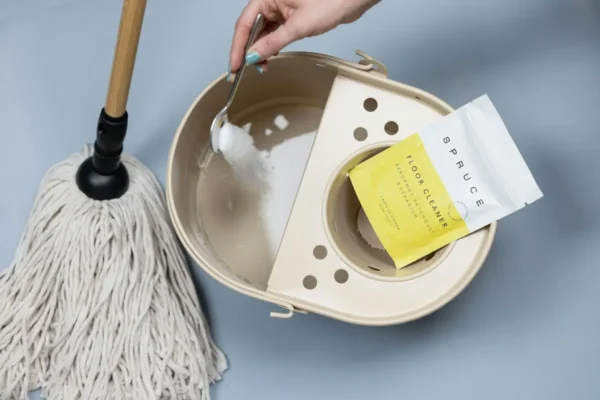
Limescale is alkaline, so it dissolves in acid. That is the whole chemistry, and it explains both what works and what goes wrong. Proprietary descalers, white vinegar and citric acid all work on chrome, ceramic, glass and stainless steel given time to act: a cloth soaked in the solution and left on a tap for half an hour does more than vigorous scrubbing. Scrubbing with abrasives scratches chrome and glass, and the scratches then hold the next layer of scale faster.
Three things to avoid. Never use acid on natural stone such as marble, limestone or travertine, which are themselves calcium carbonate and will etch permanently; the same goes for some gold and brass finishes and for enamel that has already worn thin. Never mix a descaler with bleach or any chlorine product, as the reaction releases chlorine gas; the Health and Safety Executive’s guidance on hazardous substances is clear on this. And do not leave strong descalers on grout or sealant, which they soften.
What cleaning services in Kent do about it
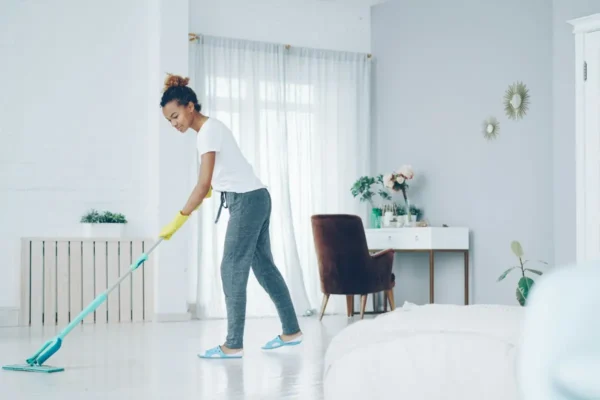
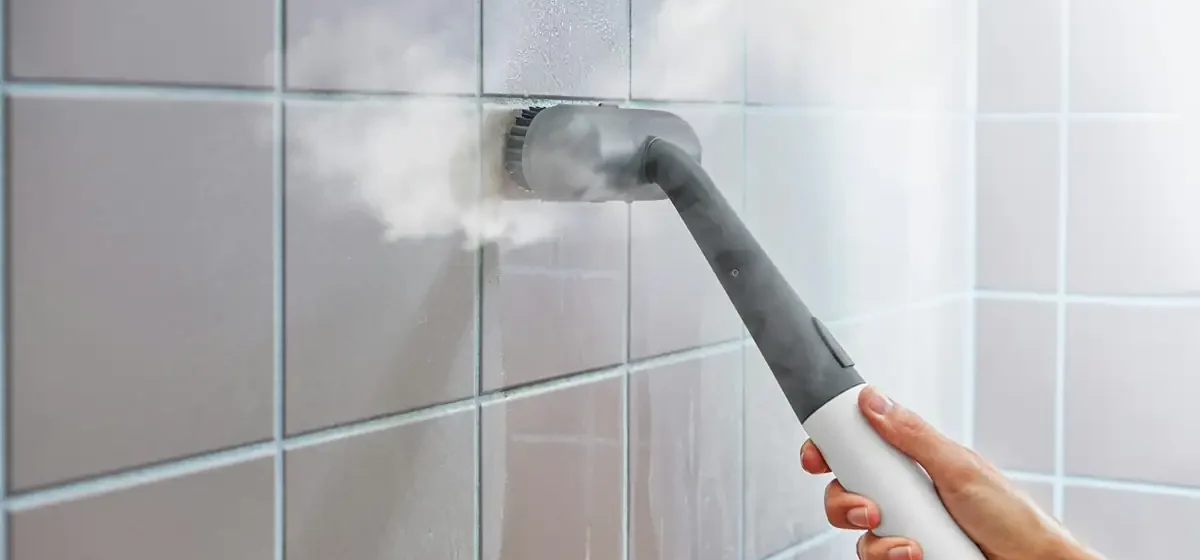
Regular domestic cleaning keeps scale down with a weekly wipe. When it has built up over months, it becomes a deep cleaning job: a longer dwell time with the right product for each surface, mechanical removal on toilet rims and shower screens with non-scratch tools, and the inside of the kettle, dishwasher and washing machine done on the same visit. This is what people mean when they ask what is a deep clean, at least in a hard water area, and it is the core of what house cleaning services across the county sell as a one-off. A good cleaner will also tell you what cannot be recovered: a shower screen etched by years of scale and scrubbing will never be fully clear again, and an honest company says so rather than charging to try.
For prevention, a squeegee on the shower screen after every use, a wipe of the taps and a monthly citric acid run through the kettle do more than any product. A water softener or an inline scale inhibitor is a plumbing job rather than a cleaning one.
What is different in Kent
The county’s housing stock splits the problem in two. In the older housing of Canterbury, Rochester and the coastal towns, bathrooms often have original enamel baths, older chrome and cast iron that has been descaled many times, so the surfaces are already worn and need gentler, longer treatments; original tiles and some stone floors must not see acid at all. Coastal homes add salt spray to the film on outside glass and frames, which a cleaner should rinse rather than scrub. In the newer estates of Ashford and Ebbsfleet the fittings are modern and robust, but new builds often carry fine builder’s debris in the pipework for the first year, and white composite sinks and glossy units show scale almost immediately. Kent County Council and the district councils run the recycling centres and bulky waste collections; descaling products count as household chemicals and should not go down the drain in quantity.
When to call a professional
Scale inside a boiler, hot water cylinder or combi heat exchanger is a job for a heating engineer, and any work on a gas boiler must be done by a Gas Safe registered engineer. Fitting a water softener is plumbing. If descaling reveals leaks around a tap base or a toilet pan, that is a plumber’s call before further cleaning. Rubbish removal from a clear-out needs a waste carrier registered with the Environment Agency, with you holding a duty of care. In a pre-2000 home, old floor tiles and textured ceilings may contain asbestos and the HSE advises leaving them undisturbed. And if mould sits alongside the scale in a bathroom, the cause is ventilation, which a cleaner can point out but not fix.
If the scale has got ahead of you, describe the bathroom, the kitchen and what you want recovered to The Household Daily’s help desk, and the desk will help you take the next step.
Questions people ask
Why is there so much limescale in Kent homes?
Most of Kent's water comes through chalk and is classed as hard or very hard by the supplying water companies. When it is heated or evaporates, dissolved calcium settles as limescale on anything it touches.
What should never be descaled with acid?
Marble, limestone, travertine and other natural stone, which etch permanently, plus some gold and brass finishes and worn enamel. Never mix a descaler with bleach either, as the HSE warns the reaction releases chlorine gas.
Can a deep clean get an old shower screen clear again?
Often, but not always. Scale that has sat for years and been scrubbed with abrasives can etch the glass, and no cleaning will reverse that. A good cleaner will say so before charging to try.
Ready to take the next step?
Tell the household desk what has happened, where you are and when you need help. We will review it and explain your options.
Describe your job →Guidance is general and refers to the authority that sets each rule. Costs are indicative ranges; always get written quotes. Trade availability and credentials are confirmed when you enquire.