Most patios in Kent go green within a couple of winters and develop small black spots a few years after that, and the usual response, a hired pressure washer and a weekend, often makes the black spots worse. Understanding what is actually growing on the paving explains why patio cleaning Kent firms do the job in stages, and why some surfaces come up like new while others never quite do.
Patio cleaning Kent basics: what is growing on your paving
Three different things cause the discolouration, and they need different treatment.
- Green algae. A film of single-celled algae that forms on any damp, shaded surface. It is slippery, which is the real problem, and comes off easily with a pressure washer or a biocide.
- Moss. Grows in the joints and on rough, porous stone that holds water. Pressure washing removes it but also blasts out the jointing sand or mortar it was rooted in, which is why re-sanding or re-pointing is part of a proper job.
- Black spot lichen. The small black dots on sandstone, limestone and concrete slabs are a lichen, a fungus living with an alga, and it anchors into the surface. Pressure washing takes off the top layer and leaves the holdfast, which regrows. Lichen needs a chemical treatment, left on for weeks, and often more than one application.
Why it happens: shade, water and porosity
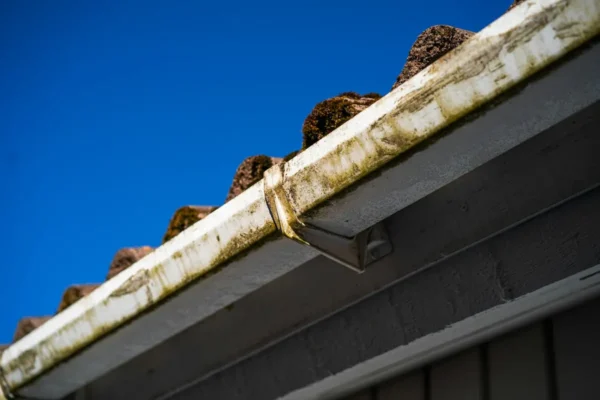
Growth needs moisture, shade and something to grip. A north-facing patio under a fence, a surface with a slight fall towards the house rather than away from it, and porous stone such as Indian sandstone all keep water on the surface longer. Kent’s mild, damp winters and the sea air in the coastal towns suit algae well, and the free-draining chalk soils of mid-Kent make less difference than people hope because the paving itself holds the water. Overhanging trees add leaf litter that feeds the growth, and a blocked gutter dripping onto one corner of a patio produces a green stripe within a season, which is why gutter cleaning Kent firms often get asked to do the patio at the same visit.
What the fix looks like
- Assessment. A firm will want to know the surface: concrete slabs, block paving, natural sandstone or limestone, porcelain, or resin-bound. Porcelain and resin need low pressure; soft sandstone needs a wide fan nozzle; block paving tolerates a rotary surface cleaner.
- Pre-treatment where lichen is present. A biocide is applied to dry stone and left, sometimes for a week or more, so the lichen dies back before washing.
- Pressure washing. Usually with a flat surface cleaner for the main area and a lance for edges, with the dirty water directed to a drain or soakaway rather than a flower bed.
- Re-sanding or re-pointing. Block paving gets kiln-dried sand brushed into the joints; slab patios may need mortar joints repaired.
- Optional sealing. A sealant slows regrowth and makes the next clean easier, but it changes the look of some stone and must go onto a fully dry surface.
The common mistake with do-it-yourself pressure washing is a narrow jet held close to the stone. It scores sandstone, etches concrete and strips the top from block paving, and the roughened surface then holds more water and goes green faster.
How to keep a driveway or patio clean after pressure washing
Keep water off it: fix the dripping gutter, cut back the hedge that shades it, and brush leaves off in autumn rather than leaving them to rot. A light biocide treatment once a year, applied with a watering can in dry weather, holds algae off for most of the year on a typical patio. Driveway pressure cleaning lasts longer on a sealed surface and on a drive that gets sun. On a shaded patio, expect to repeat a full clean every two to three years.
What is different in Kent
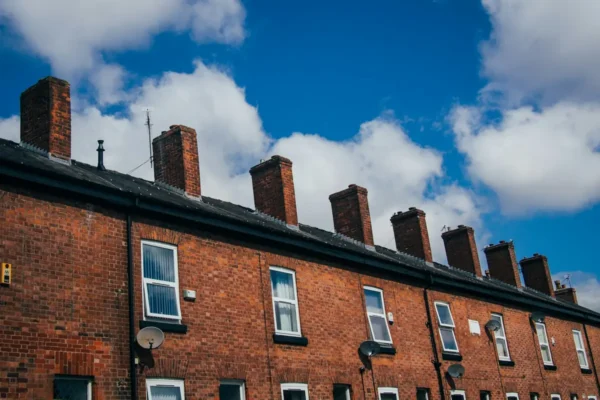
Kent’s housing runs from Victorian and Georgian terraces in Canterbury, Rochester and the coastal towns to large new estates around Ashford and Ebbsfleet. The older towns have small walled yards, often with brick or York stone paving that is soft and easily damaged by high pressure, and access is frequently through the house. The new estates are mostly block paving and concrete, which clean well but need re-sanding every time. Coastal towns get salt-laden air that feeds algae and discolours render and glass, so the conservatory roof cleaning Kent firms are asked for is a regular job rather than an occasional one. Kent County Council deals with highways and is the trading standards authority; waste and recycling sit with the district councils, so where run-off goes and how waste leaves the site are both worth asking the firm about.
When to call a professional
A patio at ground level is low risk, but the same firm often offers roof, gutter and conservatory work at height, and anything above a single storey needs proper access equipment under the Health and Safety Executive’s work at height guidance. Pre-2000 houses may have asbestos cement garage roofs, soffits or conservatory panels; the HSE advises that these are never pressure washed. Biocides for lichen are regulated products, and a firm should name what it uses and keep it out of ponds, drains and the chalk aquifer that supplies much of Kent’s drinking water. Removed moss, silt and debris must be taken by a waste carrier registered with the Environment Agency, and you keep a duty of care for that waste.
If your patio has gone green or black, describe the surface, its size and how shaded it is to The Household Daily’s help desk, and the desk will help you take the next step.
Questions people ask
Why do black spots come back after pressure washing?
The spots are lichen, which anchors into the stone. A jet removes the surface growth and leaves the holdfast. A biocide treatment left on for weeks, sometimes repeated, is needed to kill it.
Can I pressure wash Indian sandstone?
Carefully, with a wide fan nozzle at low pressure and from a distance. A narrow jet held close scores the surface, which then holds water and greens faster. Many firms soft wash it instead.
How often does a patio in Kent need cleaning?
A shaded patio typically needs a full clean every two to three years, with an annual light biocide treatment in between. Sunny, well-drained paving lasts longer.
Ready to take the next step?
Tell the household desk what has happened, where you are and when you need help. We will review it and explain your options.
Describe your job →Guidance is general and refers to the authority that sets each rule. Costs are indicative ranges; always get written quotes. Trade availability and credentials are confirmed when you enquire.