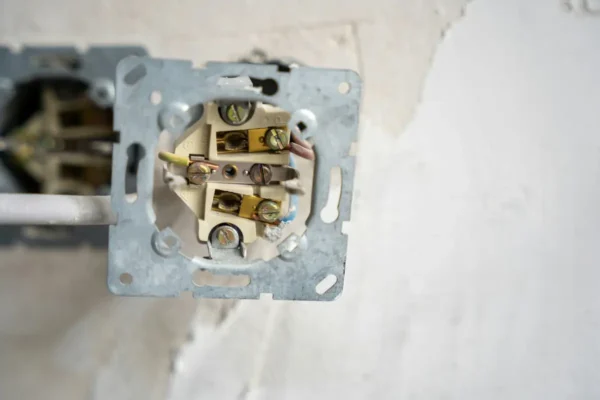
If you let a flat or house in Richmond, an electrical safety certificate is not optional paperwork. Since 2020 every private landlord in England has needed a satisfactory report on the fixed wiring, renewed at least every five years, with copies handed to tenants on a fixed timetable. This guide explains what the certificate is, the deadlines that follow it, what tenants can ask for, the penalties for getting it wrong, and what the inspection typically costs in this part of London.
What an electrical safety certificate actually is
The document most people call an electrical safety certificate is formally an Electrical Installation Condition Report, or EICR. It is produced by a qualified electrician after a visual inspection and a series of tests on the fixed installation: the consumer unit, the cables in the walls, sockets, switches, light fittings and earthing. It does not cover portable appliances, so a kettle or a fridge supplied with the property falls outside it.
The report grades any faults with a code. Under the standard used by NICEIC and NAPIT registered inspectors, C1 means danger is present, C2 means a fault is potentially dangerous, C3 means an improvement is recommended and FI means further investigation is needed. Any C1 or C2 makes the report unsatisfactory, and an FI does too until it is resolved. A report with only C3 observations is satisfactory, although the advice is still worth acting on.
The five year rule and the deadlines that follow it
The Electrical Safety Standards in the Private Rented Sector (England) Regulations 2020 require landlords to have the installation inspected at least every five years, or sooner if the previous report sets a shorter interval. The regulations apply to almost all private tenancies, including houses in multiple occupation. Social housing and long leases of seven years or more are outside them.
The clock does not stop once the inspector leaves. The regulations set several deadlines that landlords in Richmond regularly miss:
- Give every existing tenant a copy of the report within 28 days of the inspection.
- Give a new tenant a copy before they move in, and a prospective tenant a copy within 28 days of a request.
- Complete any remedial work for C1, C2 or FI items within 28 days, or sooner if the report says so.
- Send the tenant and the local authority written confirmation of completed remedial work within 28 days of finishing it.
- Supply a copy to the council within seven days if it asks for one.
Keep the report until the next one is issued and give a copy to the next inspector.
What tenants in Richmond can ask for
A tenant is entitled to see the current report and to ask when the next inspection is due. If the report is unsatisfactory, the tenant can ask for evidence that the remedial work was done, which should be a written note from the electrician or a fresh report. Tenants cannot refuse the inspection indefinitely, and the regulations protect a landlord who can show reasonable efforts to gain access.
Alongside the 2020 regulations, section 11 of the Landlord and Tenant Act 1985 obliges landlords to keep the installations for electricity in repair and proper working order. A tenant whose sockets spark or whose trip switch cuts out every evening has a repair claim regardless of whether the five year report is in date. Our guide to RCD tripping and electrical testing in Richmond explains why that usually happens.
What is different about Richmond’s rental stock
Richmond upon Thames has an older rental mix than most outer London boroughs. Victorian and Edwardian villas split into flats, mansion blocks along the river and flats above shops on George Street, Hill Rise and the Twickenham and Teddington high streets all turn up in the lettings market. Many were rewired in the 1970s or 1980s and have never been looked at since, so first inspections often return C2 codes for missing RCD protection, undersized earthing or plastic consumer units in escape routes.
Flats above commercial premises bring a second issue: the supply often enters through the shop, and the inspector needs access to the meter and main switch. Arrange that with the commercial tenant before the appointment or the report may be marked with limitations. Any installation on the low-lying streets near the Thames that has been under flood water needs a full inspection rather than a quick dry out.
Prices in Richmond follow London rates, which run above the national average. As an indicative range, an EICR on a one or two bedroom flat typically costs £150 to £250, and a three or four bedroom house £220 to £400 depending on the number of circuits. Remedial work is quoted separately. For a broader view of local tradespeople, see our Richmond hub and the electrical services section.
Penalties and how the council enforces them
Enforcement sits with the London Borough of Richmond upon Thames. Under the 2020 regulations a council can serve a remedial notice, arrange urgent work itself and recover the cost, and impose a financial penalty of up to £30,000 for each breach. The official guidance for landlords, tenants and local authorities is published on gov.uk and is worth reading in full before a tenancy starts.
A missing or expired report also weakens a landlord in other disputes. Deposit adjudicators, rent repayment order tribunals and the courts treat an absent electrical safety certificate as evidence that the property was not managed properly, and an insurer may question a claim after an electrical fire. The report costs less than a single week’s rent on most Richmond lets, which puts the risk in proportion.
When to call a professional
An EICR can only be issued by a competent electrician, and most landlords choose one registered with NICEIC, NAPIT or ELECSA so that any remedial work that is notifiable under Part P of the Building Regulations can be self-certified without a separate council application. Check the inspector’s registration number on the scheme’s website before the visit, and allow two to four hours for a typical flat.
If you are unsure whether your electrical safety certificate is still valid, or you need an inspection arranged in Richmond, send the details to The Household Daily help desk. The team reviews each enquiry and confirms availability and credentials before anything is agreed, and nothing is booked until they confirm with you. It is a free service, not an emergency line: for sparks, burning smells or a fire, call 999, and for a power cut call 105. Start at https://thehouseholddaily.com/request-help/.
Questions people ask
How often does a landlord need an electrical safety certificate?
In England the Electrical Safety Standards in the Private Rented Sector Regulations 2020 require an EICR at least every five years, or sooner if the previous report recommends a shorter interval. The report must be satisfactory, and any C1, C2 or FI items must be fixed within 28 days with written confirmation sent to the tenant and, where requested, the council.
Is an EICR the same as an electrical safety certificate?
In practice yes. The legal document is an Electrical Installation Condition Report, which electricians and letting agents shorten to EICR. Landlords and tenants often call it an electrical safety certificate. Both describe the same inspection of the fixed wiring, consumer unit, sockets and lighting, graded with C1, C2, C3 and FI codes.
What happens if a landlord in Richmond has no EICR?
The London Borough of Richmond upon Thames can serve a remedial notice, carry out urgent work and recover the cost, and impose a financial penalty of up to £30,000 per breach under the 2020 regulations. A missing report can also count against a landlord in deposit disputes, rent repayment applications and insurance claims.
Can a tenant refuse access for the electrical inspection?
A tenant can ask for a reasonable time and notice, usually at least 24 hours in writing, but cannot refuse indefinitely. The regulations protect a landlord who can show they took all reasonable steps, so keep copies of every request. Repeated refusal can also breach the tenancy agreement, which normally requires access for safety inspections.
Ready to take the next step?
Tell the household desk what has happened, where you are and when you need help. We will review it and explain your options.
Describe your job →Guidance is general and refers to the authority that sets each rule. Costs are indicative ranges; always get written quotes. Trade availability and credentials are confirmed when you enquire.