A good share of the calls a plumber in Guildford receives are for problems the householder could have narrowed down, and sometimes solved, in ten minutes. This guide covers the checks you can safely make before you pick up the phone, the things you should not touch, and the details that let plumbers in Guildford turn up with the right part on the van.
Checks you can safely make first
Find and test the stopcock
Locate the internal stopcock, usually under the kitchen sink or near where the main enters the house, and make sure it turns. In many of Guildford’s Victorian villas and 1930s semis the original stopcock has seized, and discovering that during a burst is the wrong time. If it will not move by hand, leave it and mention it to the plumber; forcing it can snap the spindle.
Read the boiler pressure gauge
If the heating is not working, look at the gauge on the front of the boiler. If you are asking what pressure should my boiler be, the usual answer for a sealed system is between one and one and a half bar when cold. Below about half a bar most boilers lock out. Your manual explains how to repressurise the boiler using the filling loop, which is a safe householder job: open the valves slowly, watch the gauge, close them at around 1.2 bar. If the pressure drops again within days, there is a leak or a faulty component and that is the plumber’s job.
Check the error code and the basics
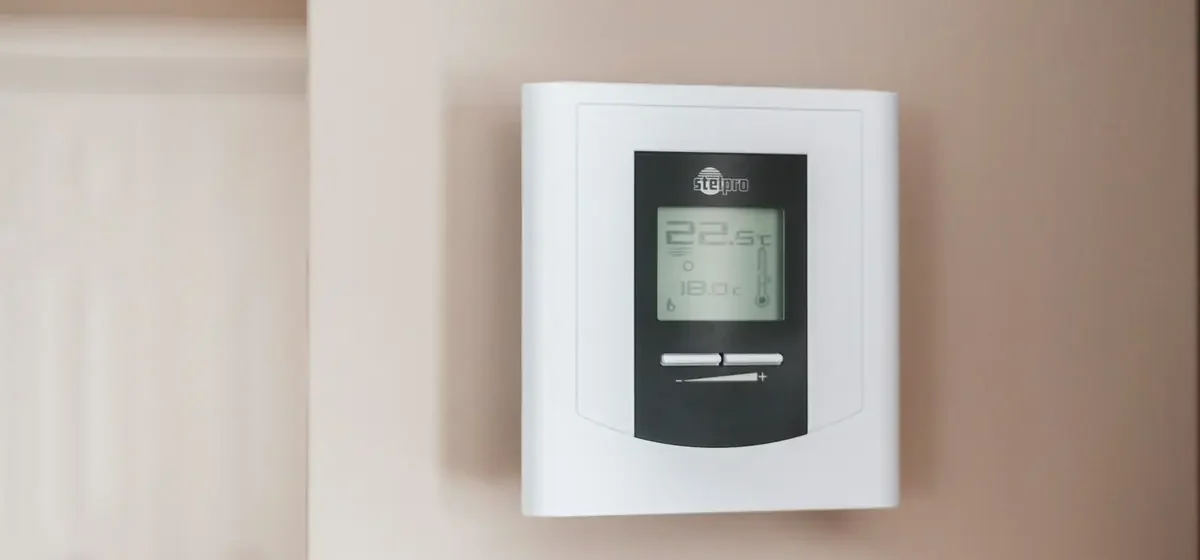
Note any code on the display, then check the thermostat is calling for heat, the programmer is on, other gas appliances work, and the outdoor condensate pipe is not frozen.
Bleed the radiators
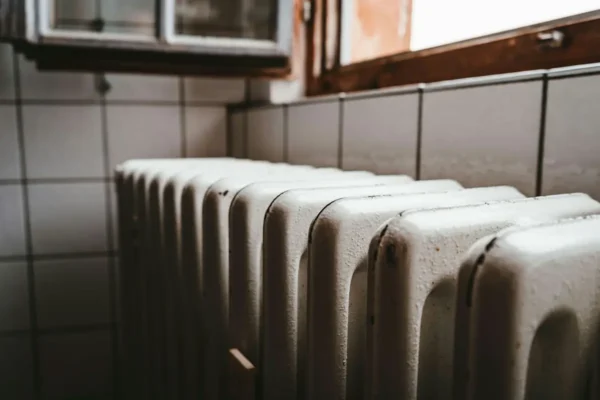
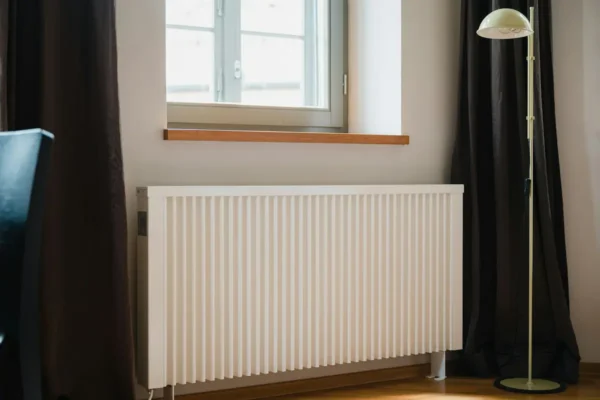
Guildford radiators that are cold at the top and warm at the bottom have air in them; a radiator key and a cloth fix that. Cold at the bottom and warm at the top means sludge, which needs a power flush or a chemical clean, so make a note rather than keep bleeding.
Trace the leak
For a drip, dry the area with kitchen roll and watch where the first bead of water appears. A leak that only occurs when the bath empties is a waste problem; one that is constant is on the supply. Check overflow pipes outside: a running overflow usually means a float valve in the toilet cistern or the loft tank.
Clear a simple blockage
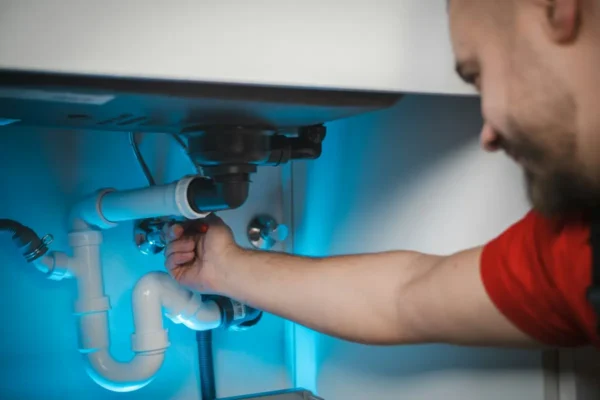
A slow sink can often be cleared by removing and cleaning the trap under the basin, with a bowl underneath. If you have poured caustic drain cleaner in first, tell the plumber, because whoever opens the trap next gets the chemical on their hands.
What not to touch
- Anything behind the boiler casing. Removing it is gas work and must be left to a Gas Safe registered engineer.
- The pressure relief valve or the expansion vessel.
- Compression joints on old pipework; tightening a weeping joint on a Victorian system often starts a worse leak.
- Electric showers and immersion heater wiring.
What to tell a plumber in Guildford
When you call, whether it is a routine booking or an emergency plumber in Guildford at midnight, have the following to hand: the make and model of the boiler, its approximate age, the error code, whether the water is off, what you have already tried, the property type and where you are in the borough. If you are in a flat, say whether the stopcock is inside your flat or on the landing, and whether the managing agent needs to approve access. Have photographs of the leak and the pipework around it ready to send; a plumber in Guildford, Surrey, can often price from a photo and bring the right fitting rather than making two trips.
What is different in Guildford
Guildford’s hillside streets are the first thing a plumber notices. Houses on the slopes above the town centre, around the Mount and towards Pewley Down, can have noticeably different mains pressure from the bottom of the hill, and a combi boiler that works well in Stoughton may struggle on an upper floor near the top of a steep road; mention your elevation when discussing a new boiler. The Victorian villas along the Portsmouth Road and in Charlotteville have had generations of plumbing added to them, and lead supply pipes still turn up. The 1930s semis of Burpham, Merrow and Onslow Village commonly have gravity hot water systems with loft tanks. The large number of student lets around the University of Surrey means many properties have landlords rather than owner-occupiers calling the plumber, and a tenant should report a fault to the landlord or agent in writing first. Water here is hard, supplied by Thames Water, and limescale is behind many failures. Town-centre parking is controlled, so tell the plumber where they can stop. Guildford Borough Council’s environmental health team deals with leaks from neighbouring properties that are not being resolved.
When to call a professional
Call once the checks above are done or if you are at all unsure. Gas work, including anything behind the boiler casing or on the flue, must be done by a Gas Safe registered engineer. Electrical work on showers, immersion heaters and boiler supplies is in England notifiable under Part P of the Building Regulations for new circuits and most bathroom work, and should be done by a registered competent person with NICEIC, NAPIT or an equivalent scheme. In homes built before 2000, old pipe lagging and boiler flues may contain asbestos; the HSE advice is not to disturb it. A blocked drain that affects more than one property, or a public sewer, is a matter for Thames Water rather than your own plumber.
When you have run through the checks, describe what you found to The Household Daily’s help desk, with your part of Guildford and the boiler make. The desk will help you take the next step and confirm availability when you enquire.
Questions people ask
What pressure should my boiler be?
For most sealed heating systems the gauge should read between one and one and a half bar when the system is cold. Your boiler manual gives the exact range. If it drops below half a bar, repressurise it with the filling loop; if it keeps dropping, call a heating engineer.
Can I repressurise the boiler myself?
Yes, this is a normal householder task. Open the filling loop valves slowly with the boiler off, watch the gauge rise to around 1.2 bar, then close both valves fully. Do not remove the boiler casing; that is gas work.
Why are my radiators cold at the bottom?
Cold at the bottom and warm at the top usually means sludge in the radiator, not air. Bleeding will not fix it. A plumber can flush the system or fit a magnetic filter.
Should I tell the plumber I used drain cleaner?
Yes, always. Caustic drain products left in a trap can burn the next person who opens it. Say what you used and when.
Ready to take the next step?
Tell the household desk what has happened, where you are and when you need help. We will review it and explain your options.
Describe your job →Guidance is general and refers to the authority that sets each rule. Costs are indicative ranges; always get written quotes. Trade availability and credentials are confirmed when you enquire.