A hedge left for two seasons becomes a hedge that costs twice as much to bring back, and the window for doing it properly is narrower than most people think. Hedge cutting in Kent is governed by one legal rule about nesting birds, by the growth habits of the plant, and by the county’s weather and soil. This article explains the nesting season rule, the best months for each common hedge type, what the job involves, typical prices and when a gardener or a tree surgeon is the right call.
The nesting season rule
Under the Wildlife and Countryside Act 1981 it is an offence to intentionally damage or destroy the nest of any wild bird while it is in use or being built. A hedge full of blackbirds, dunnocks and wrens in May is exactly such a nest site, and a hedge trimmer does not distinguish. The law does not set dates; it protects the nest whenever it is active.
Because active nests are almost impossible to see in a dense hedge, the RSPB advises avoiding hedge cutting from March to August. That advice is the practical form of the law for a householder. The sensible rule is to do structural work between September and February, inspect any hedge before cutting in the shoulder months, and stop if a nest is found.
The best months for hedge cutting, by hedge type
Winter is the right time for most hedges, but not for all of them, and the RHS guidance on pruning times is the reference worth following.
- Beech and hornbeam. Late winter, before the buds break. Both hold their brown leaves until spring, so a February cut keeps the screen and gives a clean flush.
- Hawthorn, blackthorn and mixed native hedges. Any time from autumn to February. Hard renovation cuts go in January or February.
- Yew and box. Late summer for shape, light tidy in winter. Yew tolerates hard cutting into old wood; most conifers do not.
- Leylandii and other conifers. Late summer and early autumn only. Cut back to bare brown wood and it will not regrow. Winter is for height reduction by a tree surgeon.
- Laurel, privet and escallonia. Late summer, with a light winter trim. Laurel is best cut with secateurs or loppers because trimmers shred the large leaves.
- Flowering hedges such as forsythia. Straight after flowering, so winter cutting removes next spring’s display.
What is different in Kent
Kent’s hedges grow on two very different soils. The chalk of the North Downs around Maidstone, Sevenoaks and Canterbury drains fast, suits beech, yew and box, and lets a gardener work in winter without churning the lawn. The Wealden clay to the south holds water, so winter access is the problem: a wet December leaves the ground too soft for ladders, platforms and barrows, and a frost or a dry week is the time to book.
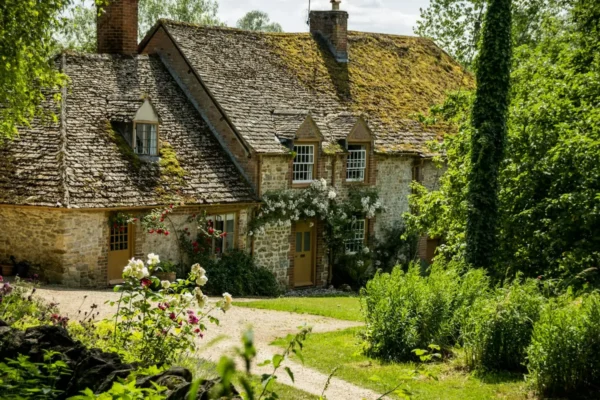
The county’s housing adds its own patterns. The 1930s semis around Maidstone and the Medway towns have privet front hedges that were planted with the house and have been cut at the same height for ninety years. Larger plots in the Weald carry mixed native hedges and shelterbelts. Leylandii planted for privacy in the 1980s and 1990s now stand at eight metres in many suburban gardens and are beyond a hedge trimmer. Our guide to gardeners in Maidstone and across Kent covers the local trade, and the Kent hub collects the rest.
What the job involves and what it costs
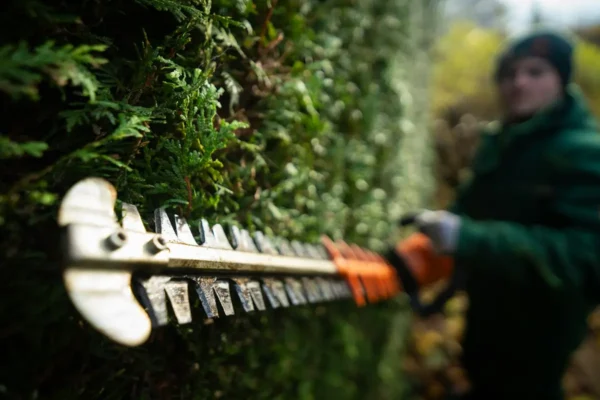
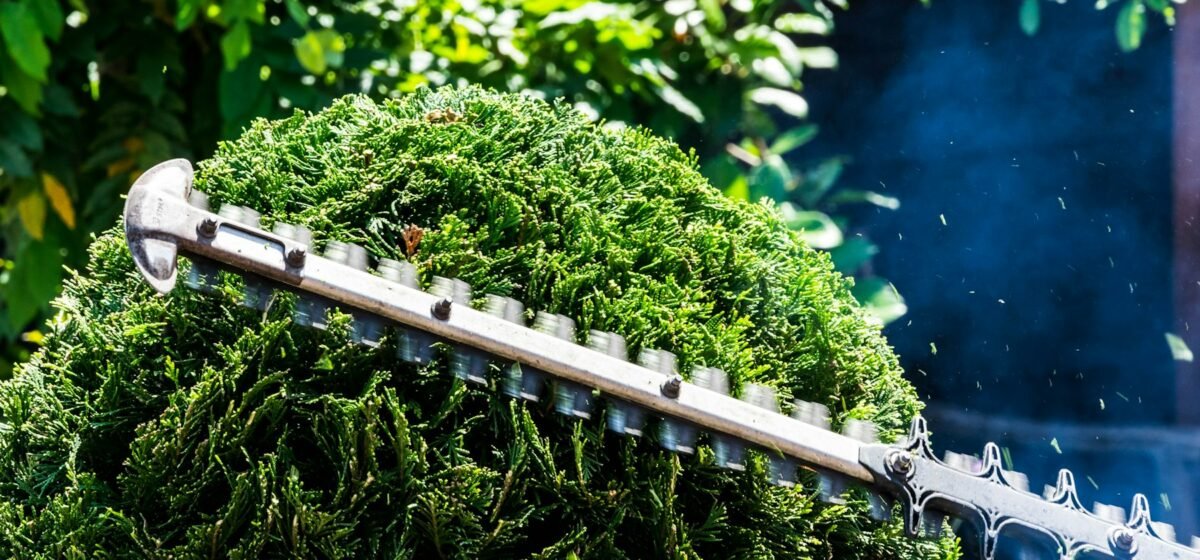
A standard cut takes the sides first, slightly narrower at the top than the base so light reaches the lower growth, then the top to a line, with a string line for long runs. Renovation cuts for an overgrown hedge are done in stages over two or three winters, one side at a time, so the plant is never stripped at once. A hedge over about two and a half metres needs a platform or a long-reach trimmer, and above four metres it is tree work.
Indicative prices in Kent run from £25 to £45 an hour for a gardener who brings the kit, with a minimum of one or two hours. A long hedge is often priced per metre run, and a full day sits at an indicative £150 to £280. Green waste removal adds roughly £20 to £60 a load; a renovation cut on a long leylandii hedge can fill a trailer. West Kent and the London boroughs run higher than the east of the county. For prices across the county line, the Bromley hedge trimming checklist is a useful comparison.
Preparing the hedge and the gardener’s visit
Walk the hedge before the visit and look for nests, wasps’ nests (dormant in winter but worth knowing about), fence panels or wire buried in the growth, and overhead cables. Decide the height and width you want and say so, because the difference between a tidy and a hard cut is a different day’s work. Clear the base of the hedge so clippings can be raked, and agree who removes the waste; most councils in Kent charge for garden waste collection, so a gardener’s load fee is often cheaper.
If the hedge is shared, speak to the neighbour first. You may cut what overhangs your side, but the hedge itself belongs to whoever planted it, and a hard reduction on one side only leaves an unbalanced plant.
When to call a professional for hedge cutting
A low hedge and a sharp pair of shears are a satisfying afternoon. Call a gardener when the hedge is above head height, longer than a few metres, overgrown by more than a season, or when the waste would fill the car. Call a tree surgeon rather than a gardener when a conifer hedge needs reducing by metres, when a hedge sits under a Tree Preservation Order or in a conservation area (the local planning authority will say), or when the work is near power lines. If a hedge is on fire or a cable is down, call 999 or the power cut line on 105.
The gardening service hub explains what the trade covers. To get the hedge cut in the right month by someone who has been checked, send a photo and the rough length to the free help desk at thehouseholddaily.com/request-help. The team reviews each enquiry and confirms availability and credentials before anything is agreed. Nothing is booked until the team confirms.
Questions people ask
When is it illegal to cut a hedge in the UK?
There is no blanket ban on dates, but under the Wildlife and Countryside Act 1981 it is an offence to intentionally damage or destroy an active bird's nest. Because nests are hard to spot in a dense hedge, the RSPB advises not cutting between March and August. Outside that window, check the hedge before you start; a nest in use is protected whatever the month.
What is the best month to cut a hedge?
For most garden hedges, late winter, February into early March, gives the cleanest result: the plant is dormant, the structure is visible and growth resumes soon after to hide the cuts. Conifers such as leylandii are better cut in late summer and again in early autumn, never hard into old wood. Evergreens like laurel and privet take a trim in late summer and a light tidy in winter.
How much does hedge cutting cost in Kent?
Indicative prices run from about £25 to £45 an hour for a gardener with their own tools, with a minimum of one or two hours, and green waste removal on top at roughly £20 to £60 a load. A long or tall hedge is often priced per metre or as a day rate of £150 to £280. Prices in the London boroughs and west Kent sit above those in the east of the county.
Can my neighbour make me cut my hedge?
A hedge is yours to cut unless it is causing a problem. Under the Anti-social Behaviour Act 2003 a neighbour can complain to the council about an evergreen hedge over two metres that blocks light, and the council can order it reduced. Overhanging branches can be cut back to the boundary by the neighbour, but the cuttings remain your property and should be offered back.
Ready to take the next step?
Tell the household desk what has happened, where you are and when you need help. We will review it and explain your options.
Describe your job →Guidance is general and refers to the authority that sets each rule. Costs are indicative ranges; always get written quotes. Trade availability and credentials are confirmed when you enquire.