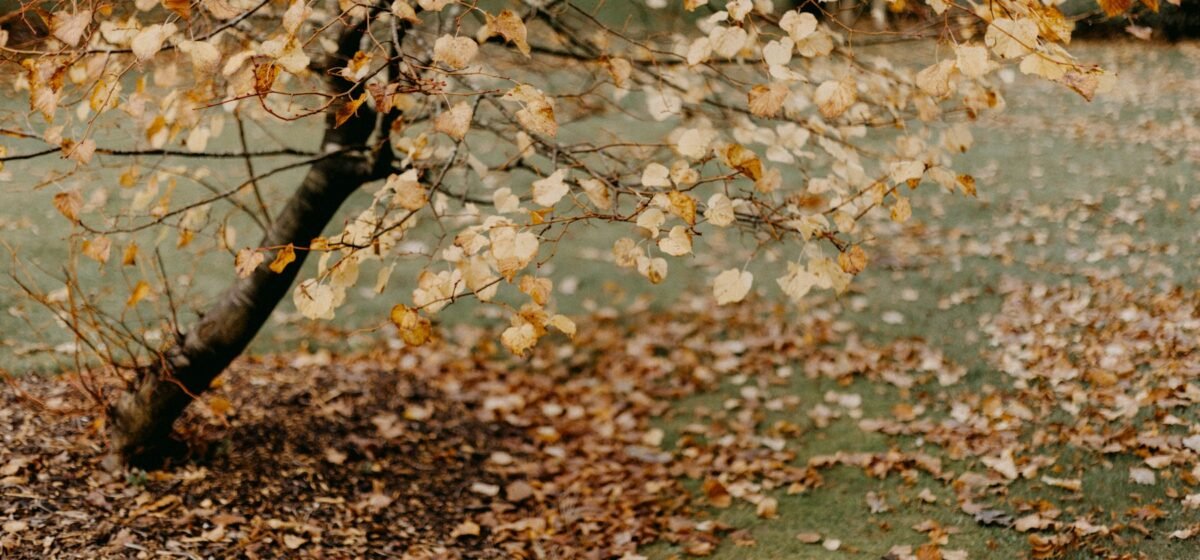
A lawn under a wet blanket of leaves in November is a lawn with bare patches and moss in March. Leaf clearance is the most urgent garden job of the month, and it pairs with the lawn work that has to be finished before the first frost closes the season. This checklist for Bromley gardens covers leaves, leaf mould, scarifying and aerating, gutters, what to do with the waste under the borough’s garden waste rules, and what a gardener typically charges for the lot.
Why the first frost is the deadline
Grass stops growing when soil temperatures fall below about five degrees, and once the ground freezes it should not be walked on at all, because frozen blades crush and the turf bruises. The Met Office publishes frost forecasts, and in the London suburbs the first proper ground frost usually arrives in late November or December, later than in the countryside because of the urban heat. That gives a working window of a few weeks after the main leaf fall and before the lawn shuts down. Everything on the list below belongs inside it.
The leaf clearance checklist
Work through the list in order on a dry day, because wet leaves weigh three times as much and clog every tool.
- Lawn first. Rake or blow leaves off the grass every week while they are falling, not once at the end. A mower with the blades raised and the collector on lifts and shreds them in one pass.
- Paths, steps and the drive. Wet leaves on paving are a slip hazard and stain the slabs. Clear and brush.
- Gutters and downpipes. Leaves and moss block the outlets and send water down the wall. Clear from a ladder on firm ground or with a gutter tool; above a single storey this is a job for someone with the right access equipment.
- Drains and gullies. Lift the grating and scoop out the leaves. A blocked gully floods the patio in the first heavy rain.
- Pond. Net it or skim it. Rotting leaves in a pond starve the water of oxygen.
- Beds and borders. Leave a thin layer as mulch. Clear only where leaves are smothering small plants or sitting on the crowns of alpines and lavender.
- Make leaf mould. A wire cage in a corner, or bin bags with holes, filled, wetted and forgotten for a year.
Lawn care before the lawn shuts down
With the leaves off, the lawn gets its autumn work, and in a Bromley garden the order matters. Scarify first, with a spring-tine rake or a powered scarifier, to drag out moss and thatch; the lawn looks worse for a fortnight and better for a year. Aerate next, with a garden fork pushed in every 15cm or a hollow-tine tool on compacted clay, so winter rain drains instead of sitting on the surface. Brush in a sharp sand top dressing if the ground is heavy.
Give a last cut with the blades raised in a dry spell, and apply an autumn lawn feed, high in potassium and low in nitrogen, if the ground is not waterlogged. Spring feed applied now forces soft growth that frost kills. Then stay off it. The RHS guidance on autumn lawn care sets out the timings in detail, and the London lawn calendar carries them through the year.
What is different in Bromley
Bromley is the largest London borough by area and the leafiest, with mature street trees, big back gardens behind the 1930s semis of Petts Wood, Orpington and West Wickham, and the oaks and beeches of the commons and parks dropping onto the gardens around them. A semi with a mature oak behind it can shed more leaves in three weeks than a terrace in inner London sees in a year. The clay soil across much of the borough holds water, which is why aerating the lawn is not optional here.
Garden waste is the local complication. Bromley runs a paid garden waste collection subscription rather than a free kerbside service, with terms that change from year to year, so check the council’s current scheme before planning on it. Leaves can also be taken to the borough’s reuse and recycling centres, or composted at home. Prices for gardeners sit in the London range, an indicative £25 to £45 an hour with a two-hour minimum, and waste removal is usually a separate charge. The Bromley hub collects the local guides, and the Bromley hedge trimming checklist covers the other big autumn job.
Getting a gardener to do it in one visit
Leaf clearance, lawn scarifying and a gutter clean are the natural bundle for a single autumn visit. A gardener arrives with a blower, a scarifier, bags and a trailer and clears in three hours what takes a householder two weekends. Ask for an hourly rate, the minimum, whether waste removal is included, and whether the gutters are within what they will do at height. Book in early November, before the trade’s diary fills with the same request from every house on the street.
When to call a professional
Raking a small lawn is an afternoon. Call a gardener when the garden has mature trees over it, when the lawn needs scarifying and aerating as well as clearing, when the waste would fill the car several times, or when the leaves have already been down a month. Call a roofer or a gutter specialist rather than a gardener for gutters above a single storey, and a tree surgeon for any branch that has come down in the autumn winds. For a garden that has gone past clearance into jungle, the guide to how an overgrown garden is tackled sets out what that job looks like.
The gardening service hub explains what the trade covers. For leaf clearance and lawn care before the frost, send a photo of the garden and the trees over it to the free help desk at thehouseholddaily.com/request-help. The team reviews each enquiry and confirms availability and credentials before anything is agreed. Nothing is booked until the team confirms.
Questions people ask
How much does leaf clearance cost in Bromley?
Indicative prices run from about £25 to £45 an hour for a gardener with a blower, rake and bags, with a two-hour minimum common, and removal of the waste at roughly £20 to £60 a load on top. A typical Bromley semi with a couple of mature trees is a two to four hour job. Bromley sits in the London range, above most of the rest of the country.
Should I leave leaves on the lawn over winter?
Not on the lawn. A wet layer of leaves blocks light and air and kills the grass beneath within a few weeks, leaving bare patches and moss in spring. Leaves on the beds are a different matter: a thin layer mulches the soil and shelters insects, so rake them off the grass and onto the borders rather than removing them altogether.
What is leaf mould and how do I make it?
Leaf mould is rotted leaves, broken down by fungi rather than the bacteria that drive a compost heap, which is why it takes a year or two. Pile the leaves in a wire cage or in bin bags with holes punched in them, wet them and leave them. The result is a crumbly soil conditioner and seed compost. Oak and beech rot slowly; sycamore and plane faster.
Does Bromley Council collect garden waste?
Bromley runs a paid garden waste collection subscription rather than a free kerbside service, and the terms, bin sizes and price change from year to year, so check the council's current scheme. Leaves and clippings can also be taken to the borough's reuse and recycling centres. For a one-off clearance, a gardener's load fee is often cheaper than a year's subscription.
Ready to take the next step?
Tell the household desk what has happened, where you are and when you need help. We will review it and explain your options.
Describe your job →Guidance is general and refers to the authority that sets each rule. Costs are indicative ranges; always get written quotes. Trade availability and credentials are confirmed when you enquire.